Yesterday Tesla started rolling out software update 2021.24.12. These incremental updates often focus on bug fixes before they're widely rolled out to the entire fleet. However, every once in a while we're introduced to some new features in a point release.
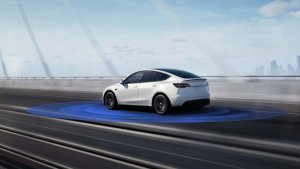
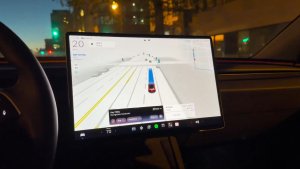
With software update 2021.24.12 Tesla has started to roll out the ability to detect and slow down for emergency vehicles. When Tesla released version 9 of the FSD Beta in July, they introduced new visualizations that show when a vehicle is actively braking.
The new visualizations were impressive and left behind the dotted, matrix-like visualizations of v8 betas. After the v9 release, Elon said that Tesla is working on detecting and reacting to more than just brake lights, but also additional things, such as turn signals, hazards, emergency vehicles and even hand gestures.
With this update, it looks like some vehicles are now getting the ability to detect emergency vehicles and react to them, while also alerting the driver.
Twitter user Analytic.eth discovered this new feature in the owner's manual that is in the car. Tesla creates dynamic owner's manuals, so they can show certain content only to vehicles that have a specific feature. So not everyone will be able to see this content in their owner's manual. In this case, Analytic.eth's owner's manual shows that his car now detects emergency vehicles in certain cases.
The owner's manual says:
"If Model3/ModelY detects lights from an emergency vehicle when using Autosteer at night on a high speed road, the driving speed is automatically reduced and the touchscreen displays a message informing you of the slowdown. You will also hear a chime and see a reminder to keep your hands on the steering wheel. When the light detections pass by or cease to appear, Autopilot resumes your cruising speed. Alternatively, you may tap the accelerator to resume your cruising speed.
Never depend on Autopilot features to determine the presence of emergency vehicles. Model3/ModelY may not detect lights from emergency vehicles in all situations. Keep your eyes on your driving path and always be prepared to take immediate action.""
It appears that Tesla is in the early phases of testing this feature. They're detecting emergency vehicles light only at night, when the feature would be more easily spotted. They're also giving the driver the ability to train the neural net by confirming or denying the presence of emergency lights, by tapping the accelerator if there isn't an emergency vehicle and they do not want the car to slow down.
Tesla executed a similar strategy with traffic light detecting where they asked the driver to confirm the presence of a green light by tapping on the accelerator.
This will help train the neural net by delivering possibly tens of thousands of images and videos to Tesla when a vehicle possibly didn't accurately detect an emergency vehicle.
Expect this feature to gain new capabilities and expand to additional vehicles in the coming weeks and months.