Tesla has always responded quickly to changes required by the National Highway Traffic Safety Administration, but what occurred during the latest recall has set a new standard. NHTSA published a recall notice about the rearview camera display in 2023 Model S, Model X, and Model Y vehicles equipped with Hardware 4.0. By the time the government body issued it, Tesla had already fixed it thanks to an over-the-air update weeks prior.
Rapid Identification and Response
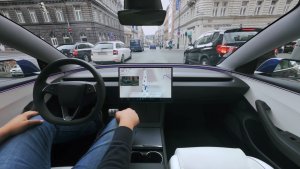
The problem, identified as a bug that occasionally prevented the rearview camera image from displaying, could have decreased the driver's rear visibility. Tesla first became aware of the issue on December 26, 2023, and promptly initiated an investigation. The root cause was found to be insufficient inter-integrated circuit protocol stability, which occasionally failed to activate the rearview camera view.
Tesla developed a fix within just two days of identifying the issue. The fix was initially deployed to a small number of vehicles on December 28, 2023, as a test. Following the successful trial, the update, labeled 2023.44.30.7, was rolled out to all affected vehicles on January 3, 2024. The recall notice from the NHTSA went to Tesla on January 23, 2024 - a full 20 days after the issue had already been addressed.
Update 2023.44.30.7
Percent of Fleet
Installs Yesterday
Debate Over the Term 'Recall'
However, despite Tesla's response, which fixed nearly 200,000 cars overnight, being used to showcase the unique advantages of its software-centric approach to vehicle design and maintenance, the legacy media used the recall to run the usual negative stories on the company.
This incident has once again sparked a debate within the Tesla community and beyond regarding using the term "recall" for issues addressed through OTA software updates. Tesla's approach differs significantly from traditional automotive recall processes, as it eliminates the need for physical vehicle servicing. The term "recall" often implies a more laborious and inconvenient process for vehicle owners, whereas Tesla's software updates are quick and seamless and do not disrupt the owner's use of the vehicle.