Tesla appears to be planning an ambitious project to build a private 5G network. This initiative would revolutionize connectivity for its vehicles and the robot, Optimus, as well as any other plans the company is likely to develop in the future.
Innovative Job Posting Reveals Big Plans
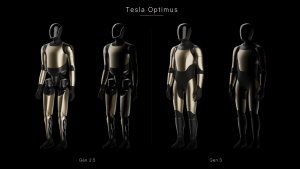
Although now removed, a recently spotted job posting for a Cellular Systems Integration Engineer on Tesla's career page shed light on the company's intentions. The role demands expertise to elevate Tesla's vehicle and Optimus robot connectivity, promising to push the boundaries of low latency and high data rates.
Tesla's journey from 3G to the anticipated 5G upgrade will bring about ultra-reliable communication and high-speed data transfer, crucial for over-the-air software updates, autonomous driving features, and real-time data analytics. These communications could be product to product, such as vehicles communicating with each other or with other products such as Optimus. However, the job posting also talks about products being able to communicate with Tesla’s internal 5G network. It’s not clear whether the private network would be internal such as at a Gigafactory, or a broader network out in the world.

The Strategic Role of Private 5G Networks
Deploying its private 5G network, Tesla aims to create a seamlessly connected environment in its manufacturing facilities, research labs, and outdoor spaces. This infrastructure is not just about enhancing vehicle connectivity; it's also pivotal for the operational efficiency of the Optimus robot in various scenarios, including warehouse operations.
Tesla's foray into private 5G networking places it in an advantageous position in the automotive and tech industries. This strategic move aligns with the global trend towards adopting private 5G networks, which promise to revolutionize industries with their reliability and speed. Tesla's efforts to develop a private 5G protocol stack that integrates with any cellular infrastructure globally will set new industry standards.
With 5G, Tesla vehicles and Optimus robots will benefit from significantly reduced latency, offering under 5 milliseconds compared to the 60-98 milliseconds of 4G networks. This technological advancement is expected to enhance the functionality and responsiveness of Tesla's products, paving the way for advanced autonomous driving capabilities and efficient robot operations.
Tesla's interest in developing a private 5G network is a logical step. By building an infrastructure that supports the fastest connectivity standards, Tesla is preparing for its vehicles and laying the groundwork for sophisticated robotics applications. This endeavor reflects Tesla's ongoing commitment to innovation and its role in shaping the future of transportation and automation.