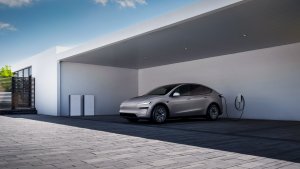
A century ago, Henry Ford revolutionized automobile production by introducing the moving assembly line, a concept that changed manufacturing forever and made cars accessible to the masses. Today, we stand at the brink of another manufacturing revolution, this time led by Tesla. The company is reinventing the assembly line for the electric age with its forthcoming $25,000 car, also referred to as Redwood.
Unboxing the Future: Tesla's Modular Manufacturing
At the heart of Tesla's innovative production approach is the "unboxed" manufacturing system. This new method breaks from the century-old linear assembly process by adopting a modular, more flexible framework. Unlike traditional manufacturing lines where vehicles inch forward on a conveyor belt to have parts added sequentially, Tesla's unboxed system assembles cars in a manner reminiscent of assembling Lego blocks. Components are pieced together in dedicated subassembly areas, only coming together in the final stages.
Tesla’s $25,000 car means tossing out Henry Ford's 100-year-old assembly line - Autonews
— Sawyer Merritt (@SawyerMerritt) March 28, 2024
"Instead of a large, rectangular car moving along a linear conveyer belt, parts are assembled simultaneously in dedicated areas and then all put together at the end. Tesla says the change… pic.twitter.com/heaxn4oS91
This modular approach is not just about breaking away from tradition; it's a strategic move to outmaneuver stiff competition from Chinese EV startups, which benefit from robust government support and an efficient local supply chain. By adopting a method that echoes the assembly techniques of the consumer electronics industry, Tesla aims to reduce its manufacturing footprint by over 40%, promising faster and more cost-effective factory construction.
Robotic Precision and Reducing Costs
The unboxed system is set to dramatically lower vehicle production costs. Estimates suggest that manufacturing costs could be slashed by as much as 50%, enabling the construction of vehicles in significantly smaller factories. This efficiency is partly attributed to advanced robotics, like the Optimus Bot, which enhances operational efficiency and safety while providing unprecedented flexibility in manufacturing.
Tesla's introduction of the unboxed manufacturing system is not merely a technical evolution; it's a strategic adaptation designed to cement Tesla's position in a rapidly evolving automotive landscape. By drastically reducing costs and enhancing production efficiency, Tesla is not just aiming to compete with Chinese EV manufacturers but is also setting a new standard for vehicle production worldwide.
Embracing Manufacturing's Electric Future
Tesla's approach could serve as a blueprint for the future of manufacturing, challenging established norms and encouraging other industries to reconsider their own production methods. Just as Ford's assembly line became a hallmark of industrial manufacturing, Tesla's unboxed system may become synonymous with the next production era, characterized by flexibility, efficiency, and sustainability.
In essence, Tesla is doing for the electric vehicle what Henry Ford did for the gasoline car: making it accessible, affordable, and adaptable to the needs of the modern world. As we witness this new chapter in manufacturing history unfold, it's clear that Tesla's innovative spirit is not just about creating cutting-edge vehicles; it's also about reshaping automotive production for the 21st century.