According to a recently published article by Bloomberg, the Trump administration intends to introduce a federal framework for autonomous vehicles. According to members of the administrative transition team, this new framework will be part of the Transportation Department’s list of priorities.
This places Tesla in a good position to begin working towards establishing and expanding its Robotaxi network and getting production, validation, and approval of the Cybercab off the ground.
Legal Limits
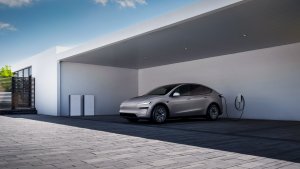
Today’s laws have fairly strict requirements for any vehicle that travels on the road—it needs to have steering wheels, pedals, mirrors, and plenty of driver-awareness or driver-assistance safety features. None of these are needed on a Robotaxi, and Tesla’s Cybercab also has none of these items. Instead, with no pedals and no steering wheel, it takes passengers from origin to destination with minimal user input.
The framework for autonomous vehicles could be spearheaded by former Uber executive Emil Michael, who could potentially take on the Transportation Department under the new administration. Uber previously worked on their autonomy program and is potentially a direct competitor to Tesla’s Robotaxi network.
The current regulation, in addition to having stringent hardware requirements, caps the number of autonomous vehicles a single company can operate at 2,500 units per year. This could drastically limit how Tesla’s Robotaxi network functions, especially since it doesn’t need additional high-resolution mapping to work in a specific location. FSD is extremely adaptable and learns on the fly.
Rather than deploying just a couple thousand units a year, Tesla needs to be able to deploy tens of thousands - the more units on the road, the faster they can collect data and iterate, especially with the recent deployment of their new Cortex Supercomputer.
State Laws
There’s one more obstacle to the mass deployment of autonomous vehicles—state regulations. Every state has its own set of regulations, and even with federal guidance and regulations becoming less limiting and more open, every state can choose to establish exactly how much autonomy it wants.
Tesla and other companies like Waymo, which are pursuing autonomous transportation, will have to navigate a regulatory maze to get their vehicles approved at a state-by-state level.
Tesla has already taken steps to get its Robotaxi network off the ground in Palo Alto, an affluent city that has been struggling to provide affordable transportation for its residents. With looser federal regulations, Elon’s timeline of deployments in Texas and California by late 2025 may move even sooner.
This is definitely a framework to watch — with Tesla’s stock up 8% this morning on the news, unsupervised FSD and Robotaxi could be coming quicker than anyone expects.