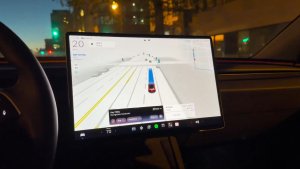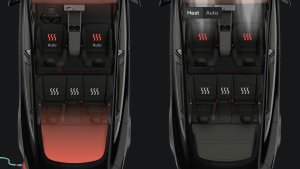
With FSD V13.2.1 finally rolling out to HW4/AI4 vehicle owners this week, we’ve been super excited to see all the new features, including Park, Unpark, and Reverse in action for the first time.
However, that’s not everything - more is coming soon. We previously reported that Tesla is collecting audio input to build neural networks for audio, and now we’re learning that that capability will arrive in FSD V13.4.
Better Audio Handling
Ashok Elluswamy, Tesla’s VP of AI, mentioned that better handling of audio inputs is coming as part of FSD V13.4. That’ll be an interesting change, as the current handling of emergency vehicles on V13.2.1 is already pretty good.
Even better handling including audio inputs coming in FSD 13.4 https://t.co/LBdcRUUYM4
— Ashok Elluswamy (@aelluswamy) December 17, 2024
However, we’re sure that being able to recognize emergency vehicles audibly will improve detection speed and reliability. Similarly to vision, FSD will start analyzing all the sounds it hears, and look for signs of emergency vehicles.
FSD will be able to make a reasonable determination on whether the sound of the siren is approaching or just echoing off of nearby terrain or buildings using the Doppler effect. It’s a simple mathematical principle where the frequency of a sound wave increases as the source moves towards the observer and decreases as it moves away.
Interestingly, Tesla will be using the internal microphone for this task - as there are no external microphones on any Teslas… yet. This microphone is sufficient for one simple reason - sirens are made loud enough for humans to hear them inside a moving car.
Better Than a Human
Some users have wondered how the vehicle will be able to distinguish between sirens on the radio and in real life. While I’m sure we’re not the only ones to have ever been fooled by a siren on the radio, Teslas won’t be as easily fooled.
Tesla could actually take the audio going out to the radio and remove it from the sounds captured by the microphone, effectively removing sirens from the captured audio. In addition to being able to measure the intensity and direction of the sound, your vehicle should be able to accurately recognize emergency vehicles, even before a human can.
Opt-In Audio Sharing
Tesla is now allowing FSD users to opt-in to sharing audio data. The prompt for sharing audio data is on FSD V12.5.6.4, V13.2 and V13.2.1. It’s also expected to be in the upcoming Hardware 3 version of FSD 12.6.
However, it’s worth noting that Tesla’s release notes between V13.2 and V13.2.1 changed slightly for audio sharing. Tesla initially mentioned that the vehicle would capture 10-second audio clips when a siren is heard.
In FSD V13.2.1, Tesla updated the data sharing feature, letting users know that audio recordings are now said to be captured when the vehicle detects an emergency vehicle instead of detecting a siren. The audio clip is also not limited to 10 seconds anymore.
Opting into audio sharing will share microphone recordings alongside all the other data that Tesla regularly collects as part of its FSD training. Of course, if you're uncomfortable with that, you’ll be able to opt out of just the audio portion. Tesla’s privacy policy also discloses that they anonymize and sanitize the data during collection and processing.
While vision plays a much larger role, expect Tesla to deal with the capturing and analyzing of audio data in a very similar manner.
We’ve already seen improved handling for school buses on V13.2, so we’re excited to see what else Tesla does in the next few months. Perhaps handling school zones would be the next big item to tackle.