Cybertruck owners in northern areas - especially those in Canada, have noticed slower charging rates on some vehicles. These owners are experiencing low charging amperage even when using a 48-amp Wall Connectors.
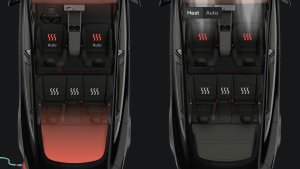
The 4680 cell - the Cybercell, seems to be sensitive to temperature changes and, as such, loses the ability to charge or discharge rapidly. Tesla accommodates this by warming the battery in advance of driving or while driving. However, there seems to be a software issue preventing the battery pack from warming up properly.
In addition, other users have noted that they don’t have regen braking due to the battery not warming up properly, even after driving. If you drive other Tesla vehicles while they’re cold-soaked, they will eventually warm up to offer you full regen and full performance. The Cybertruck, interestingly, will offer you full performance at cold-soaked temperatures as low as -20C (-4F), but will have regen unavailable in temperatures as warm as -5C (41F).
Software Fix Confirmed
Brian Silver over on X reached out to Tesla Service with his findings, who confirmed that this is a known software issue that has now been validated. Tesla Service responded by saying that they’re hopeful a fix can be built into the 2025.2 software update. This is the first time we’re hearing about Tesla’s next major software update, which is expected to be released around the second or third week of 2025.
Tesla has also confirmed that this is not a physical issue with the heating system, so no repair is required for this one - it’ll be another OTA fix, just like many others.
We’re glad to see this one getting fixed so quickly. The issue appears to have started with the 2024 Holiday Update, or it could just be a coincidence since Cybertrucks begin to settle into Canada this year, where winters are much harsher and colder on average.
Workaround
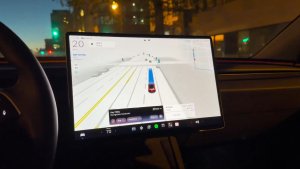
We’re hoping to see this fix go out soon, as the current procedure to get around this is annoying. It requires you to set the navigation to a nearby Supercharger so that your vehicle will precondition the battery. You can stop the navigation to the Supercharger after 5-10 minutes, at which point the battery pack will be more than warm enough to charge at the full amperage of your home charger.
This workaround also resolves the issue of limited regenerative braking by warming up the battery pack sufficiently.