On January 1st, in what could potentially have been related to other terror-related incidents, a Cybertruck loaded with firework mortars, gas, and other explosive materials, was detonated outside a Trump-affiliated hotel. This information was provided at a press conference from the Las Vegas Police Department. The FBI has declared that the incident was intentional and that it is being investigated as a potential act of terrorism.
The press conference confirmed that the only fatality was the driver. Several others were treated at a local hospital.
🚨 JUST IN: CNN reports the Cybertruck explosion at Trump Tower Vegas came from a detonation system controlled by the driver, plus explosives such as fireworks, gas tanks and camping fuel.
— Eric Daugherty (@EricLDaugh) January 1, 2025
Car bomb.pic.twitter.com/XjPAUMQSN7
We’re going to specifically look at what happened, how the Cybertruck potentially reduced the damage to the hotel and bystanders, and Elon Musk’s comments on the incident.
The Incident
After the detonation, the Cybertruck’s cabin was on fire, which kept burning until first responders managed to put it out with a combination of water and a tarp. Interestingly, even after the detonation, the Cybertruck’s battery was intact. There was no battery fire, and the battery did itself did not explode.
🚨New footage of the Tesla Cybertruck exploding in front of the Trump hotel
— DC_Draino (@DC_Draino) January 1, 2025
It looks like fireworks exploded
This was intentional
Someone was sending a message to Trump & Elon pic.twitter.com/aTpe0oM6jg
In fact, as you can see in the picture below, the tires are still intact, and even one of the headlights is on - indicating that the incident did not damage the battery. Once the fire continued, the pyro fuze blew, which cut any remaining power and isolated the high-voltage battery from other electrical systems in the truck.

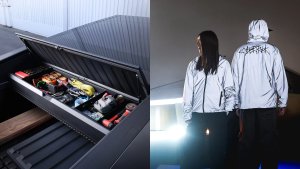
Shortly after the incident, authorities released imagery of the bed of the Cybertruck, which was confirmed to be loaded with leftover fireworks and gas tanks. Authorities are crediting the Cybertruck’s exoskeleton exterior with reducing the damage done. The bed of the Cybertruck contained the explosion and directed it upwards and outwards rather than around the vehicle.

This essentially meant that rather than serving as a vehicle-based improvised explosive device (VBIED), Cybertruck essentially stopped the explosion with the strength of its frame and exoskeleton. It is interesting to see just how strong and resilient the truck is, even when the explosion originated from within, rather than outside it.
🚨 #BREAKING: Las Vegas Police release new video of the exploded Cybertruck outside of the Trump Hotel, showing explosive ordinances in the back
— Nick Sortor (@nicksortor) January 2, 2025
Police credited the lack of damage to the Trump Hotel to the strength of the Cybertruck, as it remained mostly intact.
“The explosion… pic.twitter.com/lajQZX2pOI
Elon Musk’s Comments
Elon commented throughout the incident and in the following hours.
Shortly after the incident, Elon Musk confirmed that Tesla’s teams were investigating the incident, and then shortly afterward confirmed that the Cybertruck - at least up to the point of the explosion, was reporting nominal vehicle health.
In the hours after the incident, it was revealed that both the Cybertruck, as well as the F-150 Lightning used in the other terror-related incident, were rented from Turo, as per Elon. Turo is a company that works with vehicle owners to arrange rentals of their vehicles, netting them some extra income while their vehicle is used by someone else.
Turo’s peer-to-peer model has resulted in an exceptionally high number of insurance claims and incidents relative to standardized vehicle rentals, with unauthorized drivers stealing or damaging rented vehicles, modifying them, or doing other less-than-above-board tasks with them. After this incident, Turo has come under a considerable amount of scrutiny in how it rents out vehicles.
Musk also commented that the Cybertruck was the worst vehicle for this kind of terrorist attack. The truck redirected the explosion upward, reducing potential injuries and property damage. Even the hotel’s glass doors remained intact.