The Ride the Lightning podcast recently featured Tesla’s VP of Engineering, Lars Moravy, covering a wide range of topics—including the upcoming Model S and Model X refresh. However, some of the most intriguing details came from his comments on Tesla’s charging technology.
Moravy revisited Tesla’s once-hyped robotic charger snake, which was showcased years ago before quietly fading from the spotlight. He also dropped an interesting remark about wireless charging but didn’t go into detail.
Death of the Charger Snake
When discussing the Charger Snake, Lars had some strong opinions. It was an internal Tesla project that never gained much traction because engineers ultimately felt it wasn’t necessary.
At Superchargers, most people leave their vehicles to grab food, a drink or simply stretch—making manual plugging the vehicle in a non-issue. There was little justification for a complex, maintenance-heavy robotic charger, especially considering the challenges it would face in winter conditions. Just imagine the nightmare of keeping it operational in snow and ice.
But what about autonomous charging? As Tesla moves toward full autonomy, vehicles will need a way to charge without human intervention. And it isn’t like a Robotaxi passenger is going to like the idea of getting out of their vehicle to plug in either - which would ruin the seamless experience.
Wireless Charging and V4 Superchargers

That’s exactly where Tesla’s wireless charging comes in. We got an early glimpse of its design during the We, Robot autonomy event, where the Cybercab was shown charging wirelessly—without a traditional charging port.
Compared to complex robotic systems for handling charging cables, wireless charging is a far more practical solution. A simple charging mat eliminates the need for moving parts while allowing vehicles to charge without human intervention.
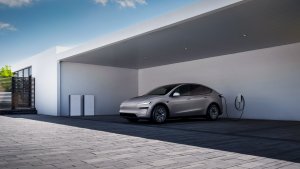
In the future, Supercharger stations will likely support both wired and wireless charging, enabling Cybercab users or owners to charge their vehicles while sleeping, watching video content, or simply relaxing—without ever needing to step outside. Wireless charging may also be cheaper to install than a complete Supercharger stall, which Tesla is now able to install for below $40k per stall.
And here’s the most exciting part. When asked whether wireless charging would require new infrastructure, Lars hinted:
“Could be. But we’re making some smart plays about that with the new V4 Superchargers…”
This suggests that as Tesla expands its V4 Supercharger network, it will include wireless charging capabilities in the upcoming V4 cabinets. While every stall won’t need wireless capabilities, having the ability to add a few wireless chargers per major location will be enough to kickstart Tesla’s Robotaxi network.