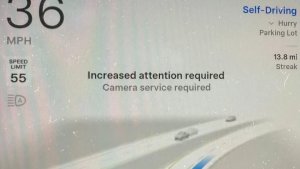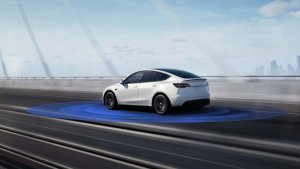
Tesla recently launched FSD in China, making it the first region outside North America to receive the feature via a software update. This marks a major milestone for Tesla, which has been working diligently to gain regulatory approval outside of North America.
Both China and Europe were key targets on Tesla’s Autonomy Roadmap, with the company aiming to roll out FSD in these regions by Q1 2025—pending regulatory approval.
Regulatory Issues
Elon Musk recently confirmed on X that FSD is ready for Europe—Tesla is just waiting on regulatory approval. However, securing approval could be challenging, as the process is overseen by the United Nations Economic Commission for Europe (UNECE), which sets regulations for the entire EU.
While the UNECE has fast-tracked some advancements—such as adaptive and matrix high-beams (soon available in the U.S.), its approach to autonomy has been far more cautious. The commission has consistently slowed the deployment of self-driving technology and even reduced the capabilities of Autopilot.
Adding to the challenge, the UNECE body responsible for vehicle autonomy meets infrequently, sometimes with months between sessions. The next meeting is scheduled for March 4, but autonomy is not yet on the agenda, meaning approval could still be a long way off.
We are waiting for regulatory approval - Musk
Regulation 157
UNECE Regulation 157 governs “Automated Lane Keeping Systems” (ALKS), similar to Autopilot or lane-keeping cruise control in other vehicles. This regulation imposes strict limits, including speed restrictions and requiring driver confirmation for every autonomous decision.
While approving a lane change with a tap on the screen or steering wheel might seem minor, imagine having to do so for every FSD action—speed adjustments, turns, stops, starts, and more.
Additionally, Regulation 157 only permits autonomy in areas where pedestrian traffic is physically separated from vehicles. This means that many highways without clear barriers would be off-limits for autonomous driving.
Hope on the Horizon
There’s still hope—if the UNECE amends Regulation 157, over 50 nations, including the EU and Japan, could open the door for FSD.
A step in the right direction came with the 2024 adoption of UN Regulation 171, which expanded the framework for driver-assist systems that don’t fully take over control—such as FSD (Supervised).
While regulatory changes take time, the momentum is building. As technology advances rapidly, it’s only a matter of time before the rules catch up.