Last week, the Ride the Lightning podcast interviewed Tesla’s VP of Vehicle Engineering, Lars Moravvy. We learned quite a bit from that episode, including the fact that Tesla is working on refreshing the Model S and X.
In this week’s episode, they interviewed Tesla’s Chief Vehicle Designer, Franz von Holzhausen, and there’s another treasure trove of information to enjoy here. This is also the 500th episode of Ride the Lightning, so if you haven’t heard of them, be sure to check them out (video below).
New Paint Colors
Tesla has replaced many of its original colors throughout the years, but it hasn’t really introduced new ones. Franz mentioned that the public weeds out the color choices - so when a color just isn’t ordered, Tesla drops it from its lineup. This includes the browns and the greens.
Meanwhile, black, white, and greys are the vast majority of what people order. The blue and the red are also equally popular. However, adding more colors increases complexity. Certain paints require multiple coats or different spray nozzles - it all adds up to additional complexity.
Colors take a while to develop, too - it takes time to establish the process, develop the color, and make sure the color will last and stay stunning. Each paint also needs to pass durability testing - and different pigments can withstand different things. This is actually why Tesla is going away from paint in the Robotaxi and they’ll instead infuse pigment into the plastic panels themselves.
Glacier Blue
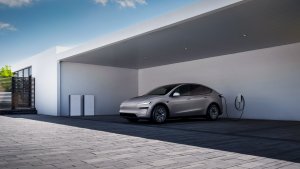
Glacier Blue is the 3rd blue that Tesla has produced - and it’s the lightest color of all the choices. Tesla had been refining this color for some time, experimenting with pigmenting to add depth and character to the silver tones. The result was Glacier Blue, which ultimately found its way to the refreshed Model Y.
Franz avoided answering whether Glacier Blue is coming to North America, but Tesla’s engineering team previously hinted that new colors are coming to North America. It’s likely that Glacier Blue, or some variant of it, will be one of the new colors. Franz also declined to answer whether Midnight Cherry Red - the beautiful red variant in Europe - would be discontinued. He said it was a really beautiful color and that Tesla had spent a lot of time on that color - and that he had to “stay tuned.”
Roadster Sneak Peak
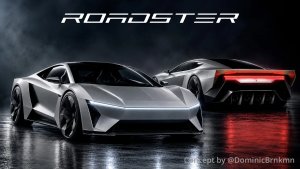
Tesla’s 2nd Gen Roadster has been a bit of a mystery. It was supposed to be a technology showcase - an EV to bring a smackdown to every other vehicle. It also served as a tech testbed - and the tech on the 2017 Roadster prototype eventually made its way down to other vehicles - like the Model S Plaid.
The Roadster should be exciting and capture everyone’s imagination. It should be a car that captures kids’ imaginations, one they have posters of and dream of owning one day. We last heard about the Roadster almost exactly a year ago, with Musk stating that Tesla radically increased the design goals for the vehicle. At the time, Musk said deliveries would be in 2025, but that seems like a pipedream right now, and maybe rightly so. Although the Roadster will undoubtedly be a marvel, it’ll be a very low-volume vehicle. If Tesla wants to continue to reach the masses, it will need to start production on its next-gen, lower-priced vehicle and roll out Robotaxi.
The Roadster serves as Tesla’s racing program, developing and testing what will eventually be integrated into other vehicles. How about cold-rocket boosters on a Cybertruck?
Challenges with Optimus
Optimus may not be a car, but Tesla’s chief designer, Franz von Holzhausen, and his team are deeply involved in shaping its design. Tesla’s designers are pushing creative boundaries to rethink what a humanoid robot can be.
The goal is to replicate the human form—a challenge that’s as much artistic as it is technical. The complexity of the human body makes this a difficult task, requiring precision in both mechanics and aesthetics.
To achieve this, Tesla has developed custom-designed actuators and joints, refining Optimus to better fit the humanoid form. Unlike traditional design and engineering teams that often work in silos, Tesla’s designers and engineers collaborate closely, allowing them to tackle and overcome challenges together.
The Affordable Model
Tesla’s mission with its products is simple: each one should feel like a premium purchase, offering more value than what you paid for it. Whether it’s an affordable model or a high-end one, Tesla is committed to creating products that are built to last, beautifully designed, and deliver exceptional performance.
This means exploring innovative materials that make their more affordable products still feel premium. Interestingly, Franz mentions the word “products” multiple times here - something he didn’t really do in other parts of the interview.
This was a fantastic interview with Franz that gave us a closer look at how Tesla works and what they have in the pipeline. Be sure to check it out below.