Tesla recently announced plans to onshore Lithium Iron Phosphate (LFP) battery production to the United States, and those plans are starting to come together in light of a new patent on LFP chemistries. The newly published patent, WO2024/229047 A1, reveals that Tesla, along with a team including renowned battery researcher Jeff Dahn from Dalhousie University (who has made significant contributions to advancing lithium-ion battery technology, including LFP for Tesla), is developing an improved LFP-based cathode material. This “boosted” LFP will likely be the foundation for future US-made Tesla vehicles.
LFP batteries are already a part of Tesla’s strategy for its Standard Range vehicles and energy storage products. They are prized for their lower cost (by avoiding expensive nickel and cobalt), long cycle life, and ability to charge to 100% without damaging the battery. By bringing LFP production to the US, Tesla could tap into domestic incentives and avoid potential tariffs. This new patent suggests that Tesla isn’t just planning on bringing LFP production to the U.S., but that it’s also looking to improve it.
LFP with a Pinch of Nickel
The core of the patent describes a “blended cathode active material.” This involves taking a standard iron phosphate-based material, like LiFePO4 or LFP, and potentially Lithium Manganese Iron Phosphate, LMFP, which forms the vast majority of the cathode - about 90-99% by weight. Then, adding in a small, carefully controlled amount of nickel oxide-based active material, such as NMC or NCA, typically between 0.1-15% or as lean as 0.1-3% by weight.
The approach isn’t just a simple mix; the patent details crucial pre-processing steps for the nickel-based component. This includes surface area processing like milling to increase its surface area and heating it to temperatures between 650°C and 800°C. These steps are designed to reduce lithium-containing impurities (like LiOH and Li2CO3) in the nickel material, which can be detrimental to battery performance.
Why Blended?
The goal of this LFP-Nickel blend is to increase LFP battery performance. In particular, the patent is targeting improved capacity retention and increased lifetime cycles. The extensive data presented in the patent shows that cells made with this blended cathode exhibit several key advantages over standard LFP cells.
Improved Capacity Retention: The blended cathodes demonstrated a better ability to hold charge over many cycles with tests showing blended cells retaining over 90% capacity after 7,000 hours of cycling at 40°C in some configurations.
Improved Cycle Lifetime: The batteries could endure more charge and discharge cycles while maintaining output voltage, which is key for vehicle lifespans.
Better High-Temperature Performance: Testing at higher temperatures, including up to 70°C showed superior stability and capacity retention.
Reduced Degradation: A fascinating finding highlighted in the patent is that the blend appears to reduce the dissolution of iron from the LFP material, which can then deposit on the anode and hinder long-term performance. The blended cells showed less iron deposition on the anode after extensive cycling.
Lower Internal Resistance Growth: Finally, these new cathodes showed more stable internal resistance over time compared to pure LFP cells, especially at higher temperatures.
By incorporating just a small fraction of the higher-energy nickel material, Tesla hopes to improve LFP battery longevity and improve charge rates without increasing the cost of these batteries, which is one of their most appealing qualities.
Impact on Charging Performance
The patent doesn't explicitly focus on achieving dramatically faster charging speeds as its primary outcome, with most cycling tests conducted at moderate C-rates like C/3*. However, the findings offer strong indicators that charging performance would also be improved.
While the patent doesn't claim a new "fast charge" LFP chemistry outright, the inherent improvements in material stability and resistance characteristics suggest that these blended LFP cells could offer more robust and reliable charging performance.
* C-rates are a measure of how quickly a battery can charge. 1C means the battery can be fully charged in an hour, while C/3 means 33% per hour.
Domestic LFP
This patented technology could be the key to Tesla's US LFP production. It offers a pathway to manufacturing LFP cells that are not only domestically sourced but also offer a tangible performance improvement over conventional LFP chemistries. This could give Tesla a competitive edge, allowing them to offer LFP-powered vehicles and energy products with better longevity, durability, and potentially even slightly better performance characteristics in demanding conditions.
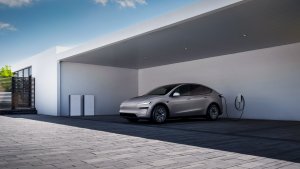
This is especially important today, as Tesla no longer sells vehicles with LFP batteries in the United States and North America due to tariffs. The only LFP battery items they sell within North America are Megapack and Powerwall, which are both excluded from tariffs (and incentives) due to their nature as stationary energy products.
As Tesla continues to innovate across the battery spectrum, from raw materials processing to cell design and manufacturing, innovations like this blended cathode could play an important role in the next generation of more affordable and durable electric vehicles and energy storage solutions.