Just days before Tesla’s planned launch of the Robotaxi network in Austin, a group of local lawmakers has sent a letter to Tesla, urging them to delay the launch. Citing a new state law set to take effect on September 1st, the letter asks Tesla to pause its launch until it can formally comply with the new framework.
On the surface, this could sound like a significant roadblock. However, upon closer examination of the lawmaker’s concerns, the requirements of the new law, and the upcoming unified federal autonomy regulations, the request may be more political theater than a genuine obstacle.
In fact, Tesla’s Robotaxi service appears to already meet the spirit—and likely the letter—of the upcoming regulatory framework.
The Letter and the Law
The letter, penned by State Senator Sarah Eckhardt, formally requests that Tesla postpone its planned Robotaxi launch this month until the new and more comprehensive autonomous vehicle law is in effect on September 1st. It's important to note that this isn’t a legal injunction; it doesn’t have any power, and Tesla is under no obligation to comply or even reply. The letter is a formal request, a piece of political pressure intended to encourage proactive compliance.
So, what does this new law demand? It has five key requirements for autonomous vehicle operation in Texas.
Barely A Speed Bump
A detailed look reveals that Tesla's existing technology and practices likely already meet every single requirement of the upcoming regulations, so let’s dive in.
1) Capable of operating in compliance with state traffic laws.
This is the fundamental purpose of FSD - complying with traffic laws to get a passenger from Point A to Point B. The system is designed to adhere to traffic laws, and in fact, sometimes sticks to them too closely (like the NHTSA stop).
2) Equipped with a recording device.
This is probably the easiest requirement when you look at a Tesla. Every vehicle is a rolling 360-degree security suite, equipped with multiple cameras and internal sensors that document every action taken by the vehicle.
3) Compliant with federal law, including federal motor vehicle safety standards.
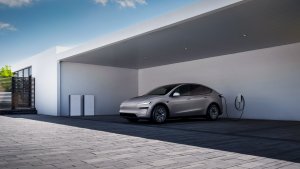
Tesla is currently deploying Model Ys for its Robotaxi network pilot, which means that they are fully compliant with FMVSS standards. This will likely change once Cybercab begins to deploy, but the NHTSA is working on accelerating federal regulation for vehicles without driver controls in the near future.
4) Capable of achieving a “minimal risk condition” if the automated system is rendered inoperable.
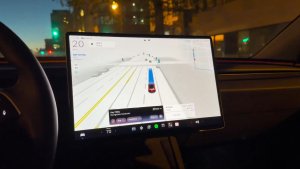
When the system detects a critical fault or issue it cannot handle, it must slow down, activate hazard lights, and pull over to a safe location at the side of the road. That is very doable, and likely within Tesla’s calculations for how they will handle system aborts and other incidents. In fact, the Model Y robotaxis with a safety driver in the passenger seat have been spotted with buttons on the screen that say “Emergency Stop” and “Pullover.”
5) Registered, Titled, and Insured under Texas law.
This is a bog-standard requirement. Every vehicle operator must meet those three requirements, and as Tesla’s Model Ys currently driving the roads in Austin are sporting manufacturer plates, this is likely already done.
Government Confusion
This letter highlights exactly the regulatory confusion that Tesla has been lobbying recently to avoid. Tesla is a major backer of the creation of unified federal rules for autonomy to prevent a messy patchwork of state and local laws.
While these Texas lawmakers are asking for a pause, the NHTSA is actively working to make it easier for companies like Tesla to deploy autonomous vehicles. This state-level scrutiny, while perhaps well-intentioned, is a clear example of the challenge of deploying a national network under fragmented regulations.
Ultimately, this letter is unlikely to be anything more than a political statement. It will be logged and acknowledged, but it presents no new technical or legal hurdles for Tesla to clear before its planned launch. For an autonomous future, this isn't even a bump in the road.