If you own a Tesla and follow the company, you’ve probably heard acronyms like MCU, HW3, or AI4 before (list of Tesla acronyms). It’s common for owners to talk about their vehicle’s hardware or computer, but one of the most important things to understand is that every modern Tesla has two primary brains. One is for you, the driver, and the other is for the car itself.
Getting these two confused is easy, but they have completely different jobs, hardware, and (potential) upgrade paths. This guide will clearly break down what each computer does and why it matters.
The Media Control Unit (MCU)
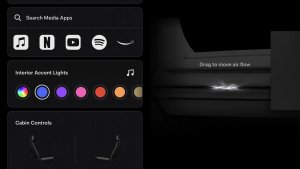
Think of the Media Control Unit (MCU), also known as the infotainment computer, as the system that powers everything you see and touch on the vehicle’s displays. It serves as the command center for your in-car experience, managing entertainment, navigation, and settings. If you’re interacting with it, you’re using the vehicle’s MCU. The MCU has its own computer chip, storage, and memory.
The MCU is responsible for the majority of the tasks in your vehicle, including:
Navigation: Displaying the map, calculating routes, and showing traffic information
Music & Media: Running apps like Spotify, Apple Music, and other audio services
Video Streaming: Powering Netflix, YouTube, Disney+, and other video services on the front and rear displays.
Gaming: Running simple games to AAA titles like Cyberpunk 2077 on certain Model S and Model X vehicles that also include a dedicated graphics processing unit (GPU)
User Interface: All menus, vehicle settings, climate controls, etc
Connectivity: Managing the Wi-Fi and cellular connections of your vehicle
Sentry Mode & Dashcam: Encoding and finalizing Sentry and Dashcam recordings, and allowing playback
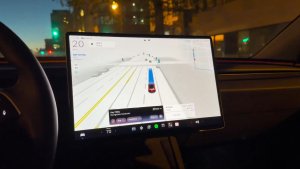
Driving Visualization: Displaying the driving visualization generated by the FSD computer
MCU Generations
There have been three major revisions of the MCU across Tesla’s history so far. The newer the MCU, the faster it is, and the more features you’ll have access to.
MCU1 was found in the original Model S and Model X vehicles and used an Nvidia Tegra processor. This MCU is now relatively outdated and offers very few modern features; however, it can be upgraded to MCU 2.
MCU2 was a big upgrade over MCU1, and uses a far more powerful Intel Atom processor. This enabled newer features like Tesla Theater and Arcade, as well as a lot of newer items included in new vehicle updates.
MCU3 is the current generation, powered by a much faster AMD Ryzen processor. This newer chip makes the infotainment unit much more responsive and unlocks a considerable number of modern features that MCU2 is unable to handle.
The FSD Computer
The FSD computer, also known as the FSD hardware or the AI, is a dedicated computer that serves two primary functions: running Autopilot or FSD, and the vehicle’s safety software. It operates almost entirely behind the scenes, constantly processing immense amounts of data from the vehicle's cameras to determine the vehicle’s environment and either performing Autopilot/FSD tasks or monitoring if it needs to intervene.
The FSD Computer is responsible for:
Sensor Processing: Analyzing feeds from all your vehicle cameras in real time
Neural Networks: Running Tesla’s neural networks to identify objects like cars, pedestrians, lane lines, and traffic signals
Driving Decisions: Executing the driving functions when Autopilot or FSD is engaged, including steering, accelerating, and braking
Driving Visualization: Building and generating the data that shows up on the screen to represent the world around your vehicle
Safety Features: Running all the key safety features at all times, whether or not Autopilot or FSD is engaged
FSD Computer Generations
While the early days of Autopilot used third-party hardware, the modern era is defined by Tesla’s custom and in-house-designed chips. These computers are referred to by their hardware revision, such as Hardware 3, Hardware 4, and so on. They’re commonly abbreviated as HW3 or HW4, and more recently, Tesla has started referring to them as AI3 and AI4, to be more specific about the computer’s function; however, the terms HW4 and AI4 remain interchangeable.
Hardware 2.5 (HW2.5): This was the last FSD computer generation to use Nvidia hardware, capable of basic Autopilot, some early FSD features, and most of Tesla’s safety features
Hardware 3 (HW3/AI3): The first FSD hardware that was custom-designed by Tesla. This was a massive leap in processing power. This computer can currently run up to FSD V12.6.X, the latest FSD version for HW3 vehicles.
Hardware 4 (HW4/AI4): The latest generation, offering much more compute than HW3. It’s designed to support higher-resolution cameras and neural networks inherently. This computer can run the latest versions of FSD and is currently expected to be the first hardware to receive FSD Unsupervised.
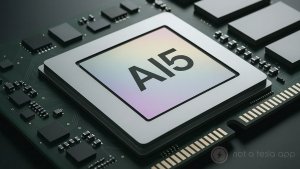
Tesla is already planning future hardware upgrades, including AI5 and AI6, but AI5 isn’t due until the end of next year, and AI6 is still years away.
A Tale of Two Upgrades
Because the MCU and FSD computer are different, their upgrade paths are completely independent, even if they are packaged into a single “unit” for cooling and wiring purposes.
Tesla offers an upgrade for MCU1 owners to upgrade to MCU2. This upgrade will cost $2,000 USD ($2,700 CAD) and requires several service hours, but it enables a bunch of new features for the legacy Model S and Model X. However, there is currently no upgrade from MCU2 to MCU3. Find out the differences between MCU 2 and MCU 3.
In terms of FSD Computer upgrades, there have been upgrades from HW2.5 to HW3, but no upgrade from HW3 to HW4 is available at this time. Tesla is still in the preliminary stages of determining the upgrade for HW3 to a future generation, but this also depends on Tesla achieving FSD Unsupervised.
In short, the computer that enables new features in your infotainment screen and that you interact with daily has no bearing on the computer the vehicle uses for FSD. Likewise, the HW3 or HW4 FSD computer doesn’t dictate the features that your infotainment unit can run, such as High-Fidelity Park Assist or Grok.
This dual-computer architecture is a robust design that allows Tesla to build on entertainment and FSD independently. It enables Tesla to offer a feature-rich experience without compromising the vehicle's critical safety systems, which are powered by a separate computer.