In a major announcement, Elon Musk has revealed that Tesla intends to begin scaling up its newly launched ride-hailing service in the San Francisco Bay Area and open it to the general public. This is the next major phase for Robotaxi in California, with an aim to move it beyond its currently limited, invite-only status and into a full-fledged public ride-hailing service.
We are working as quickly as possible to get 100+ Teslas operating for autonomous ride-hailing (can’t use the word “taxi” or “cab” in California) in the Bay Area and allow anyone to request a ride
— Elon Musk (@elonmusk) August 6, 2025
The 100+ Car Milestone
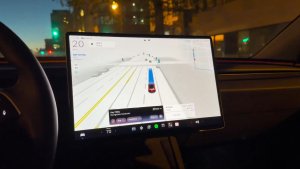
Elon has stated that Tesla is working as quickly as possible to get 100+ Teslas operating in its ride-hailing fleet in the Bay Area. Reaching a fleet of over 100 vehicles is a huge milestone. It shows Tesla’s commitment to expand and improve its “Robotaxi” network, especially in the Bay Area, where the geofence is huge compared to Austin, partly thanks to having a driver behind the wheel to help out with any edge cases.
From Beta to Public Access
Most importantly for customers, Elon confirmed that Tesla’s goal is to allow anyone in the Bay Area to request a ride. This is a transition from the currently limited, invite-only beta test to a proper transportation service that is fully open to the public.
For now, the Robotaxi app itself is still only available via TestFlight, Apple’s early-access app testing tool. There is no Android version available yet, which will be a factor for Tesla’s public launch of the network.
Robotaxi By Any Other Name
In a rather fascinating look at the strange and convoluted regulatory landscape of California, Elon also noted a specific branding constraint. He noted that Tesla cannot use the words taxi or cab in California when referring to the service.
This detail explains why Tesla has officially branded the Robotaxi Network as “Supervised Ride-Hailing Service” in California, and Elon himself uses the term “autonomous ride-hailing.” It’s definitely an interesting hurdle that Tesla will need to clear - and California likely won’t be the most challenging.
States with big taxi lobbies, like New York State, could make regulatory hurdles more difficult for Tesla and other autonomous competitors like Waymo to establish and grow their services.
While there’s no firm timeline given for Tesla’s fleet expansion, Tesla has been aggressively expanding its network. Once Robotaxi matures into a public service, the next steps will be to see just how fast Tesla can pass regulatory hurdles and expand the network to new areas.