Headlines from Bloomberg paint a dramatic picture: Tesla is disbanding its Dojo supercomputer team, its leader is leaving, and a key AI effort has been unwound. On the surface, it’s a shocking development for a project that analysts once suggested could add $500 billion to Tesla’s value.
However, a closer look at the details, including some direct comments from Elon Musk and our own research, suggests that this isn’t a story of doom and gloom, but instead a pivot towards what Tesla has already said they intend to do.
So, is Dojo really dead? The answer is more complicated - and far more interesting - than a simple “yes.”
The Scoop: What’s Being Reported
The report, citing people familiar with the matter, lays out several key developments. It states that Tesla is fully disbanding the Dojo team, and that its highly respected leader, Peter Bannon, is leaving the company.
The remaining team members are reportedly being reassigned to other data center and compute projects within Tesla. The report concludes that Tesla plans to increase its reliance on external partners like Nvidia.
Elon’s Case: Convergence, Not Cancellation
While the changes are real, Elon’s own confirmation on X frames this not as a cancellation, but as a strategic refocusing. His explanation cuts right to the heart of what Tesla is actually intending to do.
It doesn’t make sense for Tesla to divide its resources and scale two quite different AI chip designs.
— Elon Musk (@elonmusk) August 8, 2025
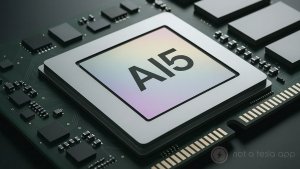
The Tesla AI5, AI6 and subsequent chips will be excellent for inference and at least pretty good for training. All effort is focused on that.
This is the key to understanding the entire move. The problem wasn’t Dojo’s potential, but the inefficiency of developing two separate, specialized AI chips in parallel: one for training (Dojo Gen 1), and another for inference in the car (the AI6 chip).
AI6 is the Next Generation of Dojo
This pivot to a unified architecture isn’t a surprise, but a logical next step in the roadmap we’ve already been tracking. Elon’s clarification on using a single path forward makes sense - he said exactly as much as this just last month. The upcoming AI6 chip was always intended to be the next generation of Dojo technology, integrating the Dojo supercomputer chip architecture directly into their in-vehicle hardware.
Furthermore, the idea that the entire Dojo program is just being unceremoniously scrapped contradicts other recent news. Tesla is just bringing the Dojo V2 chip into mass production, which is to help bolster their current training capabilities in the gap before the next-gen converged hardware becomes ready.
This unified path is made possible by the sheer power of Tesla’s upcoming chips.
The difference in real-world performance between AI4 and AI5 is far more than any chip version I’ve ever heard of by a lot.
— Elon Musk (@elonmusk) August 8, 2025
It’s real good.
Elon also mentioned that Dojo isn’t quite dead yet as a Supercomputer. Its spirit will live on, using the next generation of vehicle chips.
In a supercomputer cluster, it would make sense to put many AI5/AI6 chips on a board, whether for inference or training, simply to reduce network cabling complexity & cost by a few orders of magnitude. One could call that Dojo 3, I suppose.
— Elon Musk (@elonmusk) August 8, 2025
This confirms the convergence strategy - the next generation in-vehicle chips are going to be so powerful that Tesla’s next supercomputer cluster will simply be a massive cluster of the very same chips.
Disbanded? More like Realigned
With this context, the news of a disbanded team takes on a new meaning. The strategy is now fully focused on the unified and converged AI6/Dojo V3 architecture, and it is logical that the dedicated team working on the now-legacy Dojo V1 and Dojo V2 architecture would be realigned. This appears to be a shift of talent from a concluded project to a new, primary mission.
Peter Bannon’s departure, while significant, likely coincides with this major strategic shift in the program he was instrumental in building. While the headlines may scream that Dojo is dead, the reality is far more nuanced. Tesla is not abandoning its goal of creating custom silicon for AI training - it is refining it. The company is converging its two separate and distinct AI chip designs into a single, unified architecture with AI6. This will let them train and run FSD on the same chips, reducing the feedback loop.
This move will simplify development, accelerate the training process, and focus all of Tesla’s talent towards a single goal. The era of Dojo as a standalone supercomputer project may be over, but its spirit, architecture, and the talent behind it will go on to become the core of Tesla’s AI future.
Update: Yesterday, after we posted our article, Elon essentially confirmed our take on Dojo and Tesla’s future FSD hardware, AI6:
Once it became clear that all paths converged to AI6, I had to shut down Dojo and make some tough personnel choices, as Dojo 2 was now an evolutionary dead end.
— Elon Musk (@elonmusk) August 10, 2025
Dojo 3 arguably lives on in the form of a large number of AI6 SoCs on a single board.