In a wide-ranging interview with Top Gear, Tesla’s Vice President of Vehicle Engineering, Lars Moravy, provided a rare and detailed look into the company’s future. He not only gave us a new set of timelines for Tesla’s next wave of vehicles but also offered some insight into the relentless and incremental engineering that is going on behind the scenes.
The interview paints a vivid picture. Tesla’s team is running in Plaid-time, preparing for a massive product lineup expansion, while also improving its current best-sellers.
For those eagerly awaiting Tesla’s next products, Lars provided a series of updates on what’s really coming soon.
More Affordable Model, Semi and Cybercab
First off, the new, more affordable model is still on track for a launch this summer. This is a crucial milestone for Tesla, as they’ve already had to delay the initial 1H 2025 timeline that they’ve been pitching for over a year. This new vehicle will expand Tesla's reach to a larger segment of the market.
Alongside the push for affordability, Tesla isn’t forgetting what else it needs to innovate on. That includes the Tesla Semi and Cybercab, both beginning production in the near future. The factory for the Semi is undergoing final touches in Reno, Nevada, while the Cybercab’s production line will be built in the existing space set aside at Giga Texas.
Connecting all these products is one item. Autonomy. It is the heart of Tesla, and Lars noted that his team is dedicating a significant amount of time to designing vehicle interiors in support of that singular focus. That philosophy will be the key behind the Cybercab, and more so, the Robovan.
The Engineering Masterclass: More Range, Same Battery
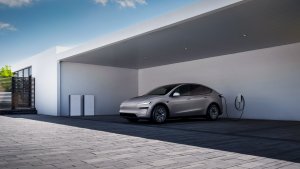
To power this ambitious future, Tesla continues to obsessively refine its current products. Lars provided us with a unique look into just how Tesla engineered the refreshed Model Y. They used a series of small, clever improvements, resulting in a major improvement in real-world efficiency.
The end result is a 5-10% improvement in the official sticker range, and more importantly, a 10% better real-world fleet range, all without increasing the size of the battery.
This death by a thousand cuts approach to optimization is a core part of Tesla’s engineering DNA. The improvements come from every part of the vehicle. First up is an increase in efficiency brought through a lowered coefficient of drag (CD) of just 0.22. That made a significant increase in efficiency, as drag has a massive impact on range.
The engineering team also found efficiencies in places many would overlook. A new brake-by-wire system with a hydraulic pass-through actively pulls the brake pads further away from the discs when not in use, reducing residual friction. In combination with new, lower-friction wheel bearings, these minor changes all add up to have a real impact on efficiency.
Increased efficiency can either extend the range of the vehicle for buyers, giving Tesla a superior product, or enable Tesla to maintain the same range with a smaller battery, therefore reducing costs. This level of engineering will set car makers apart in the future.
Tesla also optimized the drive units on the refreshed Model Y. There is a new oil pump for the motors, and a new “kickass fluid” designed to further reduce friction and improve performance. Again, all minor, under-the-hood improvements that help add up for that overall range improvement.
The Foundations of the Future
The dual focus on a grand, future-looking roadmap, as well as on a meticulous, near-obsessive refinement of current products, is what defines Tesla’s engineering strategy. The path to Semi, Cybercab, and the affordable vehicle are all paved with the lessons Tesla has learned from perfecting every detail of every component of the vehicles on the road today.
As Lars himself said, Tesla’s engineering team is now half the size it was a decade ago, but producing twice as many cars - a feat, he said, is mind-boggling. Optimization and a lean, first-principles approach drive the company, and it has definitely paid off so far.
You can check out the entire interview below.