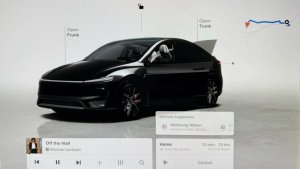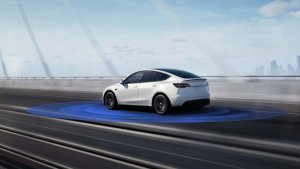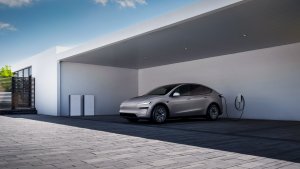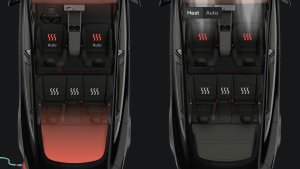
Earlier this week, Tesla revealed the Model Y L in China. The larger, 6-seat Model Y includes a more spacious interior and new seats with adjustable headrests and powered thigh support for the front and powered armrests for the second row.
While we expected this model to become available in other markets thanks to sightings of it being tested in Europe, Musk has now put a damper on that hope, at least for now.
Musk took to X to announce that the Model Y L will not be available in the U.S. any time soon, stating that it won’t be in production until the end of next year.
This variant of the Model Y doesn’t start production in the US until the end of next year.
— Elon Musk (@elonmusk) August 20, 2025
Might not ever, given the advent of self-driving in America.
He goes out to say that it may not ever launch in the U.S., given that Unsupervised FSD is around the corner. However, we wonder if he may be downplaying the importance of the Model Y L in other regions to minimize its impact on current sales.
While the vision of a fully autonomous future is a key part of Tesla’s vision, this reasoning seems to overlook the present-day needs of a massive and underserved market - families who need a spacious, affordable, and safe electric SUV. Elon’s statement was met with considerable backlash on X, with many arguing that the Robotaxi network is just not a viable substitute for a personal family vehicle, especially when the Cybercab only has two seats and is poised to be the future car of the network.
Model Y L vs the Reality of a Robotaxi
The excitement for the Model Y L has been palpable. Following its reveal in China and the recent sightings of a prototype in Germany, it was shaping up to be the practical, three-row family vehicle that many North American buyers have been anxiously waiting for.
With more space than the current Model Y, but without the price premium of the Model X, it seemed perfectly positioned to fill a huge gap in Tesla’s lineup.
Elon’s comment, however, suggests that the success of an autonomous network of small, purpose-built Cybercabs could make larger, personally owned SUVs like the Model Y L obsolete. For millions of families who represent the core market for the Model Y L, this simply isn’t a practical reality for the foreseeable future.
The transition to a fully autonomous society that Elon has been envisioning will also take years, perhaps even decades. In the meantime, there are fundamental reasons why a shared autonomous vehicle just cannot replace a family SUV.
The Market Reaction
This apparent disconnect between Tesla’s long-term vision and its customers' current needs wasn’t missed by the public. Elon’s post was met with a considerable amount of blowback on X from potential buyers who feel their practical needs are being overlooked in favor of some half-cooked vision that’s years away.
This sentiment was also reflected in the financial markets, as Tesla’s stock took a 2.5% tumble shortly after the announcement, closing 1.6% down for the day.
Other Regions
While Elon specifically mentions the U.S. in his post, he likely means all of North America. While Europe isn’t mentioned, we imagine there may be a similar timeline there. We don’t believe the much later than expected launch actually has much to do with Elon’s vision for FSD, but more with getting the factories ready to support this new model, and his comment on FSD was him just adding his personal thoughts on whether the vehicle will really be needed.
Cybertruck-based SUV?
If Tesla’s internal market analysis truly suggests that the Model Y L is not viable for North America, there may be other ways to meet this clear market demand. One potential path could be to leverage the Cybertruck platform. A large, Cybertruck-based SUV, focused on comfort and spaciousness at a more affordable price point than the truck itself.
Drop the special features like Rear Wheel Steering and the stainless steel, and all of a sudden, you have a massively capable base platform that can be turned into anything from a Suburban-esque SUV to a commercial delivery van.
But Tesla needs to make those market analysis decisions on its own, with the understanding that globalized and ubiquitous autonomy is still far away, even if Tesla manages to solve Unsupervised FSD by the end of 2025.