Tesla’s Supercharger network is again ranked number one in customer satisfaction, according to the J.D. Power ES EVX Public Charging Study, a familiar refrain across the EV industry.
For the third consecutive year, the Supercharger network has dominated the DC fast charger segment, highlighting the vast and growing gap in reliability and user experience between Tesla’s ecosystem and the rest of the public charging infrastructure.
This year’s study shows a troubling trend for the industry. While Tesla maintains a high level of satisfaction, the experience at other public fast-charging networks is deteriorating significantly.
…one out of every five charging attempts fails for non-Tesla users
By the Numbers
In the DC Fast Charger segment, Tesla’s Supercharger network scored 709 out of 1,000, picking up the top score and leading the pack. The average score is 654, with highlights being providers like ChargePoint (619), Electrify America (601), and EVgo (579) lagging below average.
Interestingly, the average is held up by companies like Red E, who, with a relatively small number of chargers, have maintained a high level of customer satisfaction (668).
Tesla also swept the Level 2 charging category, with its Destination Chargers and Wall Connectors ranking highest with a score of 661.'
Study Results
DC Fast Charging
DC Fast Charger | Score |
|---|---|
Supercharger | 709 |
Red E | 668 |
Segment Average | 654 |
ChargePoint | 619 |
Electrify America | 601 |
EVgo | 579 |
Blink | 501 |
Level 2 Charging
Level 2 Charging Station | Score |
|---|---|
Tesla Destination | 661 |
ChargePoint | 628 |
Segment Average | 607 |
Shell Recharge | 579 |
Blink | 557 |
A Failing Industry
Tesla’s consistent success stands in stark contrast to the rest of the public charging industry, which is facing a crisis of confidence. According to J.D. Power’s study, the overall satisfaction with DC fast charging in general has plummeted by 216 points since 2021. The primary driver of this is reliability.
The study found that a staggering one out of every five charging attempts fails for non-Tesla users.
Imagine pulling up to a charger, plugging in, struggling with some third-party app or tap device, and just… getting nothing working 20% of the time. If you’re on a 10-stop road trip, you’re likely to have at least one or two of these stops, if you’re not Supercharging.
This high failure rate, combined with the consistent issue of charger availability and complex payment systems, has created a frustrating experience for many EV drivers and is one of the largest barriers to wider EV adoption.
NACS is Vindicated
For the first time, the study also provided major, data-backed evidence that the charging industry’s move to Tesla’s NACS standard was the right one. A new finding revealed that even on non-Tesla charging networks, chargers equipped with the NACS plug are already outperforming their CCS counterparts in customer satisfaction.
This vindicates a long-held belief at Tesla, and of many of its customers. NACS is the superior physical standard, offering an easier-to-handle, more robust, and more reliable connection for users. The data has proven that a better user experience starts with a better plug.
At the end of the day, though, the plug is only part of the equation. While NACS is a better standard, the Supercharger network remains the undisputed king of satisfaction, in part thanks to Tesla’s real-time monitoring of each Supercharger stall.
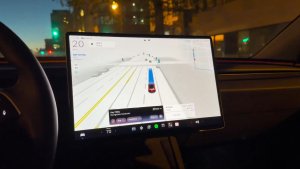
This shows that the ultimate charging experience comes from a combination of a great plug and a flawlessly reliable, vertically integrated network. From the plug-and-charge simplicity to the real-time charger availability shown in the vehicle's navigation, Tesla's approach continues to set the standard that the rest of the industry is still struggling to meet.