Another month, another milestone for Tesla’s Robotaxi program. As of yesterday, some of Tesla’s Robotaxis in Austin have begun operating on highways. This is an exciting step forward for the service, as it demonstrates how the software is evolving to handle even more challenging environments and moving beyond just low-speed city streets.
Robotaxi beta testers observed this development on unmarked test vehicles.
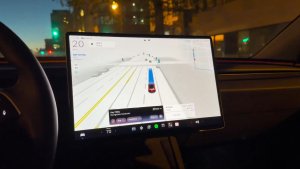
Tesla’s first autonomous vehicle delivery in Austin went on the highway without a safety monitor. However, here, Tesla is not only relying on a safety monitor in the passenger seat, but they’ve actually put someone behind the wheel.
Sept 1 in Austin and our Robotaxi arrived with Tesla safety driver in the driver seat, similar to the Bay area (no logo on the car). Here’s that first moment when I realized, our autonomous car was heading onto the freeway. pic.twitter.com/1QfyN2Ubzf
— Gail 🇺🇸 (@gailalfaratx) September 2, 2025
Two Steps Forward, One Step Back
Interestingly, the Robotaxis driving on Austin’s highways are not the same as the publicly branded network vehicles serving in the invite-only beta program. These new test vehicles aren’t sporting the Robotaxi branding, suggesting they’re part of a more dedicated engineering fleet tasked with validating the next level of Robotaxis.
These unbranded engineering vehicles sport a safety driver - not a monitor - a driver who is sitting in the driver’s seat, similar to the Bay Area Ridesharing Network.
This setup suggests that highway use is in the very early stages, and that Tesla is using a specialized fleet to test and validate the software’s performance in these new scenarios before this capability is eventually rolled out to the wider Robotaxi service.
Highway Driving is Big
The expansion of Robotaxi’s service to include highways is another milestone for the program that has seen gradual but consistent improvements. For a ride-hailing service to be truly viable and compete with human-driven alternatives like Uber and Lyft, it must be able to offer efficient, end-to-end trips that seamlessly connect different parts of a metropolitan area.
Highway driving introduces a whole new set of complexities for an autonomous system. It requires FSD to master high-speed merges, navigate complex interchanges, and confidently change lanes in fast-moving traffic. At the same time, during traffic, like in rush hour, it needs to do all those things except at a crawl.
Most accidents on the highway tend to happen at low speeds during rush hour as humans try to weave between lanes. FSD needs to be smooth enough to allow for a comfortable trip, but aggressive enough to intervene when needed.
Successfully handling these scenarios is a non-negotiable requirement for any transportation service. While the addition of highways appears to be in a controlled testing phase, its appearance on public roads is the clearest sign yet that Tesla is advancing toward a Robotaxi service that can handle the full spectrum of urban and suburban travel.
The real test will be how quickly Tesla transitions from a safety driver to a passenger-seat monitor for highway use.