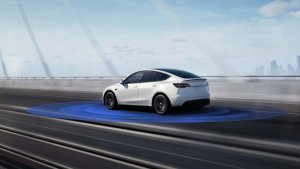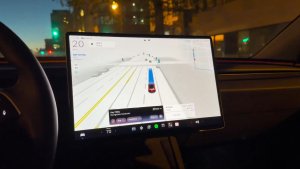
Tesla is introducing some autonomy to Giga Berlin, just like its sister factories in North America. Teslas built at Giga Berlin now engage FSD and autonomously drive themselves from the end of the production line to the outbound logistics lot.
Tesla is leveraging its FSD capabilities to improve efficiency at factories, removing the need for humans to manually drive the vehicles from the end of the production line to the outbound lots. The new process, which is now fully implemented, shows a level of automation that no other automaker in the world can currently match.
The Autonomous Journey
The video below provides a glimpse into a seamless, driverless outbound process. Once a new Tesla completes its final quality checks in the Light Tunnel, FSD is activated, and it begins its first journey without any human drivers behind the wheel.
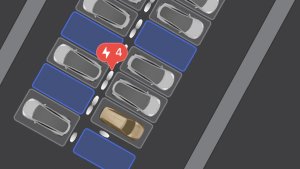
The vehicle is shown autonomously navigating the factory premises, a complex environment with other moving vehicles and equipment. In one of the most interesting and impressive steps, the car stops by an on-site Supercharger for a pre-delivery charge. Once topped off, it leaves the Supercharger and parks itself in the outbound lot, ready for transport. This entire journey, from factory exit to shipping yard, is now a fully automated process.
New Teslas drive themselves off the line at Giga Berlin
— Tesla AI (@Tesla_AI) September 3, 2025
Autonomously navigating the factory premises, they stop by the on-site Supercharger, then park in the outbound lot pic.twitter.com/QxHYQl07yM
100% Outbound Operations
Confirming the scope of this new initiative is André Thierig, Senior Director of Manufacturing at Giga Berlin, who shared his excitement on X. He stated that Tesla is now using this feature at Giga Berlin for 100% of its outbound operations, starting from the light tunnel until the car arrives at the outbound yard.
This confirmation is important. This isn’t an early test at Giga Berlin, but a fully deployed, standard operating procedure on Tesla’s production grounds. The capability is impressive, and the next step is clearly deploying it to European roads outside the factory, once Tesla receives regulatory approval.
This move is a classic example of Tesla using its most advanced products to improve its own business. Automating the end-of-line logistics saves time and manpower, eliminating the need for an army of yard drivers to constantly move thousands of new cars each week.
Bonus Sighting: Cybertruck in Germany
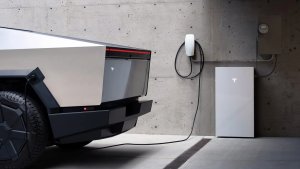
As a fun Easter egg for sharp-eyed viewers, the video also contained the first known sighting of a Cybertruck at Giga Berlin. The vehicle, clearly marked as a Support Vehicle with Giga Berlin labels on its sides, was seen on the factory premises. Maybe one day we’ll see the Cybertruck on European roads?

Either way, this new autonomous process offers a glimpse into the future of manufacturing, where products themselves play an active role in the factory's logistics, and serves as a testament to Tesla's relentless push for automation and cost-cutting.