Tesla is quietly bolstering its vehicle warranty for new vehicles sold under the 2026 model year, adding a new layer of protection for owners in the United States and Canada.
The new warranty documents reveal a “High-Priced Propulsion-Related Part Warranty,” providing an additional 7 years or 70,000 mi (110,000 km) of coverage on certain parts.
This is a clear win for buyers as it offers peace of mind on some of the most critical and costly EV components. Interestingly, this new warranty covers Tesla’s primary vehicles, including the Model S, Model 3, Model X, and Model Y. However, it appears to leave out the Cybertruck.
A New Layer of Protection
Outside of an EV’s main high-voltage battery and drive unit, which have their own 8-year warranties, there are critical components to an EV that this new warranty helps extend.
This new 7-year warranty specifically covers a long list of these expensive parts, protecting owners from potentially costly repairs well after the basic vehicle warranty has expired (50,000 miles or 4 years).
This includes:
Power Conversion System (PCS) Assembly
PCS Inlet and Outlet Assembly Hoses
Ancillary Harness Assembly
High Voltage Fast Charge Contactors Assembly
High Voltage System Controller
Front and Rear Halfshaft Assemblies
Front, Right, and Left Electrical Harness Assemblies
Supermanifold Assembly
Cooling Fan Assembly
Radiator
For owners, this new coverage significantly improves the value and long-term security of their purchase, especially with the power control unit (PCS). The PCS ensures your vehicle can both fast charge (L3) and slow charge (L1 or L2). Without it, you’ve effectively got a big brick rather than a battery, and it is one of the components most likely to malfunction if there is an electrical issue.

The Cybertruck?
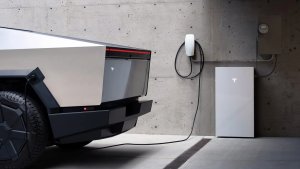
The exclusion of the Cybertruck from this otherwise welcome news is rather curious. While the reasons aren’t officially stated, there are several possibilities for its absence.
A strong possibility is simply due to the different architecture of the Cybertruck, which relies on 800V for its higher-voltage systems and 48V for its lower-voltage systems. These unique architectures may mean that its components don’t fall under the same classification or structure as Tesla’s, relying on less exotic systems.
Another factor is that the Cybertruck is still in its early stages of production. Tesla may still need to gather more long-term reliability data on its newer parts before extending warranty coverage for those items.
Of course, Tesla may simply not have updated the warranty documents for the Cybertruck yet.
The new warranty is definitely a big bonus for customers purchasing new vehicles under the 2026 model year, and a sign that Tesla is seeing increased reliability in their vehicles. Tesla won’t have made these warranty changes without knowing that an extremely high percentage of the parts involved would outlast the warranty being offered.
Thanks to Mongo for digging through the new warranty documents and letting us know.