With its latest major software update, 2025.32, Tesla is introducing an alert if the cabin radar is blocked. The cabin radar in newer vehicles (how to tell if you have one) is being used for increasingly important tasks, such as detecting seat occupancy, detecting whether children are left in the vehicle unattended, and more.
The owner's manual details new language about the alert, what causes it, and most importantly, which key vehicle functions are impacted if it's ignored.
The New Alert
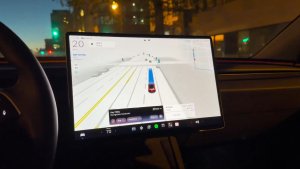
The alert, which is identified as ICR_a137, appears on screen with the message, “Cabin occupancy radar obstructed. Remove obstruction near the dome lights.”
According to the manual, this obstruction error is only detected and noted when all the vehicle’s doors are closed. That means it won’t trigger accidentally if you are moving a large item when entering or exiting.
Blocking the radar means that it won’t function properly, preventing it from being able to detect where passengers are seated correctly. There are generally two causes for obstructions, which Tesla lists in the details of the alert. Either objects are attached to the headliner above the rear view mirror mount, or there is a large object in the cabin near the front of the vehicle.
Clearing the obstruction will make the alert disappear.
What the Cabin-Radar Controls
The most significant part of this update is the fact that Tesla has now confirmed that several key vehicle features rely on the in-cabin radar. A blocked radar can lead to inaccurate readings, which may negatively impact a surprising number of vehicle functions.
According to the manual, this includes basic occupant detection, including for occupant safety restraints, the automatic parking brake when leaving the vehicle, and information on the vehicle’s display.
Tesla’s new 4D cabin radar has quite a few functions tied to safety, including being able to detect the size of passengers and automatically adjust the airbag deployment to fit. Rear-seat passenger detection is also being rolled out, reminding owners if a child or pet is left behind. This function is expected to expand to more locations and more vehicles in the future.
While the cabin radar is primarily in the refreshed Model 3 and Model Y, support for more vehicles is coming soon. Many of Tesla’s older vehicles already feature cabin radars, though they may not have all the functionality of the newer 4D sensor. You can tell if you have a radar by following our guide to check here.
Including this particular warning shows how in-cabin radar is increasingly becoming an important part of Tesla’s critical safety features.