Tesla’s relentless drive to optimize its manufacturing process is a core part of its corporate identity, and a look at the newest iterations of its FSD hardware proves that no component is safe from scrutiny. In a recent analysis of the AI4 (HW4) computer from recent Model 3 and Model Y vehicles, well-known Tesla hacker Green revealed a significantly leaner design.
Green’s overall view is that Tesla is trying hard to cut costs, but there’s definitely a lot at play here, so let’s dig in.
Removing Components
According to Green’s findings, several components have been eliminated from the new computer boards and wiring harnesses as Tesla is eliminating all non-essential components of these boards. These include the removal of various connectors and even the small batteries that power the board's real-time clocks.
The thick copper ground wire in the wiring harness has also been removed, and the board will presumably use the vehicle’s chassis as the ground, which is a standard practice.
From a purely component-level view, removing parts directly reduces the bill of materials and, consequently, the vehicle's cost.
More Than Cost-Cutting
However, these changes represent more than simple cost-cutting. For instance, eliminating individual ground wires and instead using the vehicle’s chassis for 100% of the electrical grounding is a move that simplifies the entire design, reduces waste, and cuts costs simultaneously, while keeping the components grounded effectively.
That not only saves on copper but simplifies the wiring harness, making it lighter, less complex, and easier for robots to install during assembly.
Similarly, removing the small, individual RTC batteries suggests that Tesla may potentially rely on the vehicle’s low-voltage battery, further reducing the components that need to be sourced, installed, and that could potentially fail over time.
While the removal of non-essential connectors may raise concerns over limiting future retrofits and vehicle modifications, from a mass-manufacturing standpoint, every unused port represents an unnecessary cost.
This leaner AI4 computer is the same unit that now includes a front bumper connector, allowing owners to retrofit a front bumper camera in the future, potentially. Soon, new Model 3s are expected to come from the factory with the front bumper camera installed.
Why Now With AI5 Coming Soon?
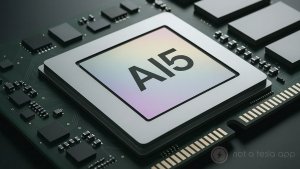
While the evolution of HW4 is a prime example of Tesla’s approach to vehicle architecture that reduces costs and service, the timing is peculiar. AI5, Tesla’s next-gen FSD computer, is expected to enter mass production late next year, so it seems these improvements to HW4 will be short-lived. However, Tesla could be incorporating improvements they’re learning while developing AI5. Between now and next year, Tesla is expected to sell approximately 2 million vehicles, and these cost savings may be worthwhile, even if AI5 is many times more powerful and is just around the corner.