Many people have been waiting with bated breath for Tesla to finally introduce the cut-down versions of the Model 3 and Model Y, which we’ve been calling the more affordable models. This isn’t the $25k vehicle, but cheaper versions of Tesla’s Model 3 and Model Y.
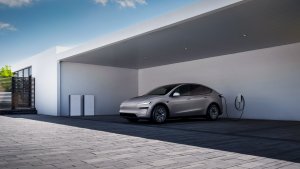
Now, with a shuffle to the lineup specifically for the United States, Tesla has officially launched its new, more-affordable Standard Rear-Wheel Drive trims for both vehicles.
The launch brings the Model Y’s starting price down to a compelling $39,990, and the Model 3 to an even more accessible $36,990.
To create a clearer distinction between the tiers, Tesla has relabeled the former Long Range vehicles as “Premium,” and that label is now well-deserved when compared to these new Standard variants. To achieve these new and aggressive price points, Tesla has made a series of deliberate and significant hardware and software compromises. While new buyers may appreciate the lower cost, current owners will be baffled by some of the changes.
We’ll break down exactly what you get and what you give up with the new Standard models in this article, so grab your steering wheel and let’s go.
The New Lineup and Pricing
The entire US lineup for the Model 3 and Model Y has been updated with new pricing. We’ve also provided some key specifications in the table below to quickly compare the new vehicles.
Pricing (USD) | Range (Miles) | 0-60 mph | |
|---|---|---|---|
Model 3 | |||
Standard RWD (new) | $36,990 | 321 | 5.8s |
Premium RWD | $42,490 | 363 | 4.9s |
Premium AWD | $47,490 | 346 | 4.2s |
Performance | $54,990 | 309 | 2.9s |
Model Y | |||
Standard RWD (new) | $39,990 | 321 | 6.8s |
Premium RWD | $44,990 | 357 | 5.4s |
Premium AWD | $48,990 | 327 | 4.6s |
Performance | $57,490 | 306 | 3.3s |
The Model Y Standard
The sub-$40K Model Y is the headline act, boasting an impressive 321 miles of range with its new 18” wheels and a 0-60mph time of 6.8 seconds, now the slowest in Tesla’s entire lineup. This is all powered by a smaller 69kWh battery pack, but it still leaves it with great range. The new pack does charge slightly slower, at a peak of 225kW, rather than 250kW.
Features Removed

The most significant changes have been inside the cabin, where numerous luxury and convenience features have been removed or altered.
The rear passenger screen has been removed entirely, and the center console has been replaced with a Cybertruck-styled open-concept design with minimal closed storage. Additionally, all the trim on the doors and dash is now made of textile. No alcantara or leather to be found here.
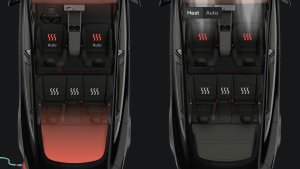
Just like with the trim, Tesla has simplified the seats as well. They now use a vegan leather and textile mix. The front seats are heated, but no longer ventilated, while the rear seats have neither heating nor cooling. To further simplify, Tesla has removed the physical seat control buttons on the side of the front seats. All seat adjustments must now be made through a new interface on the main touchscreen. While we like the buttons on the seats that make them easy to adjust while driving, we would also love to have touchscreen controls on other vehicles.

The steering wheel is now manually adjustable, rather than being power-adjustable like the rest of Tesla’s lineup. The mirror adjustments remain powered, although they also feature a new UI that we expect to arrive in other models as well. However, the power-folding mirror feature is gone. Mirrors can still be folded, but you must physically fold the mirror.
Tesla has also reduced the number of speakers to 7, down from 15, and the subwoofer has been removed. While the Model Y Standard has a particulate filter, it lacks the HEPA filter for Bioweapon Defence Mode.
Feature | Standard Models | Premium Models |
|---|---|---|
Audio | 7 speakers | 15 speakers |
FM Radio | No | Yes |
Rear Screen | No | Yes, 8” rear screen |
Rear Vents | Manual | On-screen Controls |
Ambient Lighting | No | Yes |
Heated Steering Wheel | Yes | Yes |
Steering Wheel Adjustment | Manual | Powered |
Decor | Textile | Microsuede/Textile |
Heated Seats | Front only | Front and rear |
Seat Material | Textile & vegan leather | Vegan leather |
Ventilated Seats | No | Front only |
Dimmable Mirrors | No | Yes |
Folding Mirrors | Manual | Powered |
Seat Controls | On-screen | Buttons |
Suspension | Passive shock absorbers | Freq dependent shock absorbers |
Autosteer | No | Yes |
FSD Hardware | Yes | Yes |
Sealed Frunk | No | Yes |
Light bars (Model Y) | No | Yes |
Glass roof | No for Model Y | Yes |
Center console | Open | Enclosed with cover |
Bioweapon Defense Mode | No | Yes for Model Y |
Rear Powered Seats | No | Yes for Model Y |
Matrix Headlights | No | Yes |
Exterior Colors | Gray, White or Black | Broader range of colors |
Interior Color | Black only | Black or white |
TPMS | Indirect | Direct |
Exterior Changes

Tesla has also made significant changes to the roof of the vehicle. On the exterior, the glass roof remains, but on the inside, it has been completely enclosed with a fabric headliner. This cuts off the view, but according to Tesla, it actually helps improve the vehicle’s efficiency by allowing the heater or AC to work more efficiently.
The front and rear light bars have been removed, and the headlights are standard LEDs without adaptive matrix functionality. The doors still use Tesla’s standard tempered glass, but no longer come with the double laminated glass that helps reduce road noise. The new 18” wheels, which provide the maximum 321-mile range, come with full-face aero covers to improve efficiency, similar to the covers on the Cybertruck.
Tesla is also reducing the size of the frunk - the new frunk liner is made of simplified fabric, and it’s no longer waterproof rubber. There is also no water seal on the frunk, which means that whatever you store up there will not be kept safe from the elements. In addition, much of the inside of the frunk is now exposed, allowing you see the bare metal of the vehicle.
Removal of Autopilot
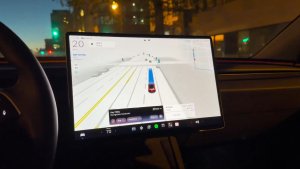
In a massive change to how Tesla normally treats its entire lineup, the Model Y Standard does not include Autosteer. It comes with Traffic-Aware Cruise Control (TACC) as standard, but lane-keeping (Autosteer) is now only available as part of the FSD package, whether purchased outright at $8,000 or paid monthly for $99.
Tesla is still including the FSD computer hardware in these vehicles, along with all the cameras, but this change is very different from their standard offerings. It also comes off as a rather odd change, as one of the biggest reasons to purchase a Tesla has been to take advantage of the simplest versions of their autonomy software - Autopilot.
With Autopilot also not available on the current builds of FSD V14, we’re not quite sure whether this is a decision to differentiate these vehicles from the rest of the lineup or whether Tesla intends to stop selling Autopilot altogether.
Core Features Remain
Despite the extensive changes, Tesla is still retaining much of the core technology of the vehicle. That means the best parts of your Tesla that you love - always connected, electric, and being able to receive meaningful OTA updates - are all still part of the package.
In addition, Tesla has kept the heat pump standard, unlike many other manufacturers for their budget EV options. Heat pumps provide a huge improvement in vehicle efficiency and charging performance, particularly in cold weather conditions.
Tesla is also including a mobile charger with both vehicles - definitely a must-have for a vehicle that’s aimed at accessibility.
A Look at the Model 3 Standard

The Model 3 Standard, starting at $36,990, shares many of the same compromises as its larger sibling, including the smaller 69kWh battery, 7-speaker sound system, and the removal of the rear screen and heated rear seats, as well as the move to touchscreen-only seat controls. It also loses Autosteer as a standard feature. However, there are a couple of key differences.
It retains the full panoramic glass roof without an interior headliner and features acoustic glass on the front doors for a quieter cabin. That’s a significant quality improvement over the Standard Model Y, plus it’s $3,000 cheaper than the Model Y.
Since the Premium (formerly Long Range) Model 3 doesn’t include light bars, the Standard version also seems like less of a step down from its slightly pricier sibling. While the Standard Model Y can be easily spotted, externally, the Standard Model 3 is hard to distinguish from the Premium versions.
In fact, we’d say that the Model 3 Standard is the far more compelling and affordable variant, and makes some of the best compromises to get the price down to a reasonable level.

Is It Worth It?
This launch is a bold move from Tesla to try to capture a wider audience. We’re not convinced, and we wouldn’t be surprised if the Standard Model Y went the way of the RWD Cybertruck. The trade-offs are significant, and buyers get a lot for the additional $5-6k dollars that the Premium versions of these vehicles cost. We highly recommend the Premium versions, if possible. However, if not, you’re still better off making a sound financial decision and choosing one of these models over a traditional ICE vehicle that’s similarly priced.
For budget-conscious buyers, these compromises may be worth the thousands saved, but for the first time, Tesla is asking its customers to make major choices about which features they can truly live without.
Deliveries for the new Standard models are expected to begin in the coming weeks.
We’ll leave you with this walk-around video of the new Standard vehicles:
I flew down to Giga Texas last week to get an early look at @Tesla's new Model 3 and Model Y Standard, their new more affordable models!
— Sawyer Merritt (@SawyerMerritt) October 7, 2025
In this video, I give a full tour of the exterior and interior of both vehicles, showing everything that's new and or different. pic.twitter.com/FzuNABv3Up