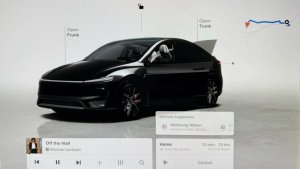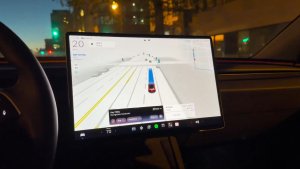
Another upcoming feature has been discovered in Tesla’s 2025.38 software update. Well-known Tesla hacker Green has unearthed a new screen-sharing service, a feature that could one day allow a user to share their vehicle’s main screen for remote viewing and diagnostics.
Although the details are still scarce due to this being an early implementation, the most likely application for such a tool is for Tesla’s service department.
Remote Diagnostics
A remote screensharing feature could make managing customer concerns much easier for Tesla Service. It could allow a technician to see a driver’s screen in real-time during a support call.
This would be invaluable for diagnosing software bugs or guiding a user through menu options. If a user encounters a software glitch, they can authorize a screen sharing session, enabling a remote technician to observe the issue firsthand, verify software versions, and review error logs —all without the user needing to leave their location.
While logs are fantastic for diagnosing performance issues or errors, UI bugs can be significantly more challenging to identify without seeing them firsthand.
The Robotaxi Angle
For vehicles operating on the nascent Robotaxi Network, Tesla can issue remote commands to get FSD unstuck. In the case of an error, viewing the on-screen visualization, as well as the vehicle cameras, could provide remote operators a way to quickly diagnose a Robotaxi and get it back on track - all with minimal interruption.
Early Security Implementation
With any remote access feature, security is paramount. According to Green’s findings, the current, unreleased, and inactive version of the feature has some very basic security measures in place. When a screenshare session is initiated, a notification will appear on the car’s display to inform the occupants.
Access is secured by a static 4-digit PIN, which is auto-generated by the vehicle once per boot. This is the detail that raises the most questions. Since a 4-digit PIN has a limited number of combinations, much of the security is left up to how the service connects to a vehicle and who has access to it. We imagine there will also be a clear indicator when screen sharing is active, similar to the red border in Service Mode.
A vehicle’s main display contains a wealth of potentially sensitive information, including location, calendar appointments, contact information, and navigation history, making security a crucial aspect of the feature.
What Green found is still an early, unreleased, and non-public version of this screen-sharing feature. It is almost certain that before this service ever goes live to customer vehicles, Tesla will implement a more robust, multi-layered security system, likely involving end-to-end encryption and dynamic, one-time-use access codes, to ensure that both vehicle security and user privacy are protected.