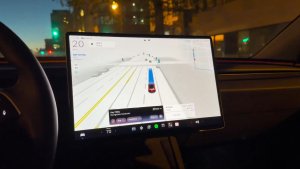
One of the most frustrating aspects of using FSD in previous versions was its occasional brittleness in certain situations. Encountering temporary adverse conditions, like blinding sun glare, a sudden downpour, or dense fog, would often trigger the dreaded Take Over Immediately (TOI) warning. This warning, accompanied by the iconic flashing red hands on the screen, hazard lights on your vehicle, would inevitably lead the car to slow down and come to a complete stop, forcing an intervention even if the condition was momentary.
Now, with the improvements made by V14, users are observing a considerable and welcome change in this behavior: FSD can now recover from TOI requests without needing to stop.
FSD 14.1 able to ignore the Take Over Immediately warning and continue driving 😱
— Dirty Tesla (@DirtyTesLa) October 7, 2025
That's the most sentient thing I've seen yet pic.twitter.com/EaD52YDsX5
Dynamic Self-Recovery
The new logic appears to be far more intelligent and resilient. Suppose FSD V14 encounters a situation where its visibility is temporarily compromised (triggering the TOI warning). In that case, it no longer immediately defaults to bringing the vehicle to a complete halt and shutting down.
Now, FSD continues to monitor the situation. If the condition that caused the warning clears quickly —for example, the angle of the sun changes, the heavy rain lets up, or the fog patch clears up —V14 is now capable of recognizing the improved visibility.
That means it can clear the TOI warning automatically and seamlessly allow the drive to continue without a disengagement. This is a massive improvement in the user experience, eliminating unnecessary and inconvenient disengagements that existed in previous FSD versions.
It makes the system feel less fragile and more capable of handling the dynamic nature of real-world driving conditions.
I had to go back and test this more, and yes, FSD 14 can continue driving after a Take Over Immediately warning if conditions improve.
— Dirty Tesla (@DirtyTesLa) October 17, 2025
In previous versions, the car turned off FSD and needed the driver to take over after a "Toi". This is huge. https://t.co/zMkbHFrWGn pic.twitter.com/x95C2NElDv
A Step Towards Unsupervised
While the immediate benefit is driver convenience, the deeper significance of this change cannot be overstated. This new self-recovery capability is a fundamental and absolutely necessary step on the path to true, unsupervised self-driving.
A vehicle aiming for full autonomy simply cannot have a failure state where it gives up and stops in the middle of a road due to common, temporary environmental conditions. A Robotaxi cannot function if it requires human intervention every time it encounters sun glare or a brief patch of heavy rain.
The ability for FSD V14 to dynamically assess its own sensor limitations, recognize when those limitations have passed, and confidently resume control without intervention is a major milestone that has gone undocumented by Tesla. The system is learning not just how to drive in ideal conditions, but also how to intelligently and safely manage its own operational boundaries in imperfect conditions—a prerequisite for removing the driver from the loop entirely. How many times do we, as humans, get momentarily blinded, only to do the best we can until the situation improves? It appears FSD is learning the same thing.