Tesla held its Q3 2025 earnings call yesterday. If you happened to miss it, or just want to review everyone Tesla talked about, we’ve got you covered with our bullet-point recap.
Below is an outline of everything discussed during the call, organized into categories. We’ll also have an in-depth look at some of the more interesting topics Tesla discussed over the next few days.
Here we go:
FSD & AI
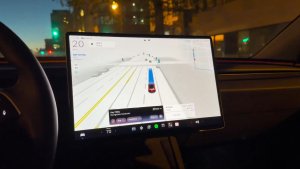
Deployed FSD V14 in October, integrating features from the Robotaxi builds
Improved handling of complex scenarios and edge cases
Road debris, emergency vehicles, and parking options
Expanded FSD to Australia/New Zealand for AI4 vehicles, HW3 coming soon
Chinese and European regulatory roadblocks continue to restrict further deployment
Tesla is working closely with regional regulators to bring FSD to customers
Tesla reached 6 billion miles driven on FSD this week
Lower one-time FSD revenue recognition YoY due to Q3’24 releases related to Cybertruck and certain features not being available such as Actually Smart Summon
This is a critical inflection point for Tesla as it prepares to deploy more autonomy into the world.
Tesla is a leader in real-world AI, unmatched by competitors
The highest density of intelligence in any vehicle on the road today, only to increase with AI5
FSD and Robotaxi will fundamentally change the nature of transport
Elon and the Tesla Executive Team believe that they’ve achieved a new clarity on FSD and AI, and can achieve FSD Unsupervised soon
FSD V14.1 has seen a lot of positive reviews online, and this indicates good progress
Elon says the “Advanced” software button should let anyone get FSD V14 in North America (see note below)
Another wave of FSD v14.1.3 rolled out last night, but being on Advanced does not get you FSD v14 right away. It may mean you’ll get it sooner.
Ashok mentioned there is decent progress on FSD adoption - about 12% of the total fleet on the road that is eligible for FSD has it.
Ashok is excluding vehicles that don’t have HW3 here
Robotaxi
Robotaxi service areas and fleet count have expanded for more real-world data refinement.
Robotaxi’s iOS app is now available in the US and Canada for waitlist sign-ups
Android app release to follow
Robotaxi supports universal scaling to future cities as regulatory barriers are crossed
Austin has expanded 3x since launch, and it's on track to continue growing at a rapid rate, both ground covered and the number of vehicles.
Tesla’s Robotaxis blend into traffic, unlike competitor autonomy products
All of Tesla’s vehicles are designed for autonomy from the ground up
This helps to build and increase public trust for FSD and Robotaxi
Optimus
Elon once again mentions that Optimus has the potential to be the biggest product of all time.
Optimus V3 is to be unveiled in Q1 2026 and will be a big engineering leap
Elon alluded to V3 feeling like a “person in a robot suit” and made a nod to the original stage debut of Optimus
Tesla’s real-world intelligence being developed for cars (FSD) transfers its learnings and progress to Optimus as well
As FSD gets progressively better, so does Optimus as Tesla takes the lessons from one version of FSD to another
Battery, Powertrain & Manufacturing
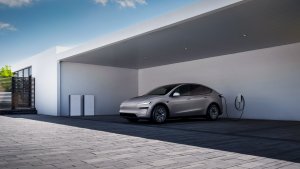
New battery pack and powertrain for the Model 3/Y Standard, offering 321 miles of range
Localized and de-risked supply chains for LFP and nickel
On-shoring of battery production to North America continues:
Texas lithium refinery production begins Q4 2025
Nevada LFP production begins Q1 2026
Automotive margins have increased from 15% to 15.4% due to better materials and fixed cost absorption
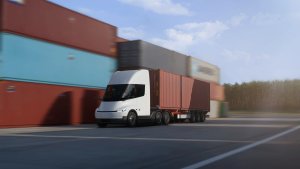
Semi volume production to begin in early 2026
Tesla Energy
Record 12.5GWh of energy storage deployments, up 81% YoY
Gross profit increased to $1.1B, up sequentially and YoY
Unveiled Megablock and Megapack V3 for simplified utility-scale deployments
Megapack 3 at Megafactory Houston begins 2026 (50GWh annual capacity)
New US solar + Powerwall leasing is helping drive residential demand
Megablock and Megapack V3 have made big strides for grid-scale energy deployments, and Tesla is facing extreme demand for both products
Tesla is seeing a lot of demand from AI and data center customers, who are seeking to reduce costs and increase uptime
Elon talked about increasing the overall effective energy available to the United States
Average usage over a 24-hour cycle is 0.5TWh, buffering the cycle with batteries can effectively double the grid output due to the rise and fall in usage over the day
Grid-scale storage is helping to electrify the world and helping to move the world towards sustainable abundance
Megapack V4 is already being planned
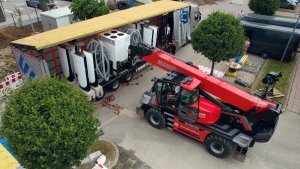
Will integrate the substation directly into Megapack, greatly improving deployability and no longer requiring a substation to be built to support grid-scale energy storage
Tariffs have been a major challenge for Tesla Energy due to material sourcing and production locations.
Megafactory Shanghai is still ramping, and as it ramps, Tesla will be less impacted by tariffs.
Forward-Looking Outlook
Focused on long-term growth despite trade, tariff, and fiscal policy uncertainty
Tesla continues prudent investing in vehicles, energy, and robotics for future value.
Tesla continues to aim for its updated mission: sustainable abundance under Master Plan Part IV.
Optimus, Autonomy, and grid-scale energy storage are all key steps toward this goal
Tesla’s free cash flow is at an all-time high ($4.0 billion)
Major R&D investments will occur in 2026, focused heavily on AI and Robotics
Bringing AI to the real world is challenging, but Tesla is excited about the future opportunities
The benefits of these expenses will be realized in the future as Tesla continues to work on Robotaxi and Optimus
Etc.,
Elon mentioned that people see Tesla primarily as a car company
No other automotive companies are making humanoid robots, grid-scale energy storage, or building charging stations en masse
No other company is working on real-world AI at Tesla’s scale
Tesla has the electrical-mechanical and AI engineering capabilities that enable this
No one else has the ability or agility to scale production to make a meaningful challenge to Tesla
Tesla has seen demand grow quarter-over-quarter this year, much of it due to the launch of the refreshed Model Y
This included the Model Y L (now officially known as the “Long Wheel Base”), Performance, and now the new Standard variants
Strong deliveries in all regions this quarter, some bolstered by the closure of certain regulatory credits
Due to this, Tesla saw a 29% increase in income from automotive deliveries this quarter, even against a regulatory credit decrease
Tesla paid over $400M in tariffs in 2025 so far, including both automotive and energy sectors
A noted loss was reported with the changeover to plans for the AI5 chipset
Investor Q&A
What are the latest Robotaxi metrics, fleet size, cumulative miles, intervention rates, and when will safety drivers be removed? What are the obstacles preventing UFSD from being deployed to customer vehicles?
No safety drivers in large parts of Austin by the end of the year (Ashok later stated no person in the car, so this appears to remove highway safety drivers and safety monitors)
Tesla is still being paranoid/cautious about the deployment
A single accident would be global headline news
No safety drivers at all in a few months
8-10 metro areas by the end of 2025, depending on regulatory approvals
Nevada, Florida, and Arizona by the end of the year
No one in Austin’s driver's seat, ¼ million miles
Bay Area still requires a driver due to regulations, passed 1M miles
FSD passed 6 billion miles total
What is the demand/backlog for Megapack, Powerwall, Solar, or energy storage systems? With the current AI boom, is Tesla planning to supply power to other hyperscalers?
Strong demand from customers
Strong demand for megablock, shipping next year
Lots of demand from AI/data center customers to relieve grid constraints and ensure uptime
Surge in residential solar demand, boosted by solar leasing
Tesla Buffalo Factory is now making Tesla Solar Panels
What are the present challenges in bringing Optimus to market, considering app control software, engineering hardware, training general mobility models, training task-specific models, training voice models, implementing manufacturing, and establishing supply chains?
Bringing Optimus to market is a challenge, not a walk in the park (even if Optimus itself can walk around the park)
Tesla is running Optimus robots in its labs 24/7
Hands as dextrous as a human hand are extremely challenging, but necessary
Real-world AI and scaling production need to make Optimus relevant
Optimus must be made at volumes comparable to or higher than vehicles
Tesla is building the supply chain for Optimus from the ground up
There is no pre-existing supply chain
Tesla is aiming for very deep vertical integration, as it is its own supply chain.
Can be achieved, but with an immense amount of work
Elon wants voting control before he builds a massive number of robots, to ensure he has a strong influence over them
He mentioned he doesn't intend to sell
Can you update us on the $16.5 B Samsung chip deal in Taylor? Given the importance of semiconductors to autonomy and Tesla's AI-driven future, what gives you confidence that Samsung can fulfill A16 at Tesla's timelines and achieve relatively better yields and cost versus TSMC?
Nothing but great things to say about Samsung (Elon)
They manufacture AI4 currently, and do a great job on it
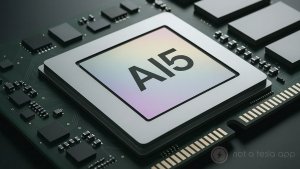
TSMC and Samsung will both make AI5
40x better than AI4 in some metrics
AI5 removed the legacy/traditional GPU, as it's not needed
AI4 and Nvidia hardware are used in data centers for training now
Future expansions will use the excess production of AI5 units
Nvidia is still improving, but they have to satisfy a lot of requirements for many customers, while Tesla’s chips are more focused on what is actually needed for FSD
AI5 will be the best performance per-watt by a factor of 2-3x, and best performance per dollar by a factor of 5-10x
Instead of trying to replace HW3 with HW4, why not give an equal incentive to trade in for a new vehicle?
Tesla has offered customers the opportunity to transfer FSD to new vehicles, including preferential rates
Tesla wants to solve autonomy first, and then find a way to take care of these customers
How long until we see self-driving Tesla semi trucks? And could you see this technology replacing trains?
Ramp ongoing for production, more production expected in Q2
Semis are better for last-miles, while trains are extremely efficient for long distances
The AI team is focused on passenger vehicles and will touch semis after autonomy is solved
Expert Q&A (Call-In)
Expanding production for vehicles ASAP now that there’s confidence in Unsupervised Autonomy - what about today’s capacity for 3M vehicles per year - is Tesla going to expand now or later? Will demand incentives be required?
Capacity isn’t quite 3M today, but aspirationally, it could get to 3M in 24 months or less.
Tesla has a vast supply chain that it needs to scale in tandem
Incremental factory expansion will happen in the future
Cybercab starts production in Q2 next year, and is the next biggest item for production
Cybercab will have the lowest cost-per-mile, optimized for a comfortable drive
Tesla isn’t intending to sacrifice margins, but believes that once Unsupervised Autonomy is solved, anyone who can buy the car will buy the car
Elon is 100% confident that Tesla can solve Unsupervised FSD at a safety level much greater than humans
V14.1 is done, tech roadmap is looking very good
Reasoning is coming to FSD, and Tesla’s World Simulator is getting super realistic, helping to train FSD even faster.
Increasing the parameter count by another order of magnitude (not in V14.1, likely V14.3), all before AI5
AI5 will be another big leap in performance
Elon once again talked about a distributed inference fleet with the spare compute capacity.
Tesla is focused on AI in the physical world with Master Plan Part IV, a willingness to go into new markets, and new products. What are Tesla’s core competencies in AI, and what is outside their core competencies?
Tesla doesn’t really have a core competency; the company is like a dozen startups, good at many things.
Powerwall, Megapack, EVs, Supercharging, AI, etc..
Optimus at scale is Tesla’s infinite money glitch.
If Optimus achieved 5x the productivity of a person per year (operating tethered, so no need to charge), it could enhance productivity massively.
No real limit to the physical use of AIs
Optimus doing a kung-fu routine at the Tron premiere wasn’t remotely controlled.
To what extent are Tesla's and xAI’s efforts complementary?
Grok is a gigantic model, can’t squeeze it into a car - it is meant for artificial general intelligence, not just driving, like FSD.
Is the limitation in the Bay Area (safety driver) regulatory? What about other markets? Is it part of Tesla’s process to include a safety driver in new markets?
The Bay Area safety driver is regulated.
Yes, Tesla will include safety drivers/occupants in new markets as they open new markets.
Peculiarities about cities/edge cases/unexpected challenges mean Tesla believes they should do this, even if not regulated.
Likely about 5 months of safety drivers.
FSD V14 has a different feel than V13 - is it a different development path? Is Tesla hunting for notable improvements in intervention rates, or is it about adding new features?
Major new architectures are focused on safety first, such as dropping intervention rates.
After that, Tesla works on comfort.
Elon believes most people should wait for later versions (e.g., V14.2), due to comfort issues.
Reasoning will come to V14.3 or V14.4 - will think about what parking spot to take based on context (e.g., this is the entrance).
Supposed to come by this year.
Banish is supposed to come this year.
What’s the plan for Optimus improvements in the future?
Optimus production ramp is supposed to start next year, but it will only move as fast as the most complex of items.
Tesla will continue iterating on Optimus even as production starts, V4, and V5 are planned to improve capabilities further.