Tesla’s Q3 2025 Earnings Call (read summary of everything announced) wasn’t just bragging about numbers; it was another update on Tesla’s progress towards the AI future. Amid surging vehicle deliveries and some spectacular energy storage wins, the spotlight shone brightest on FSD, AI software breakthroughs, and the Robotaxi fleet, poised to upend what the world thinks about mobility.
Forget incremental updates; this Earnings Call was Tesla’s doubling down on their bets to make real-world AI work, with some tight timelines. Tesla is full throttle on AI, so tighten your seatbelt, as we take a look.
FSD V14: Safety-First Towards Autonomy
FSD isn’t a mere fiction out of Isaac Asimov or the futuristic depictions you’d see in a magazine from the ‘80s. It is here now, racking up billions of miles on the roads today.
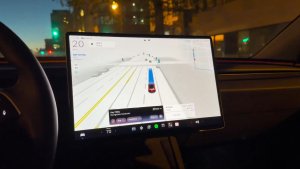
Tesla began the wider deployment of FSD V14 this month, pulling in features and lessons it learned on the streets from billions of miles—and from the nearly 1.25 million miles gathered by the Robotaxi fleet in Austin and the Bay Area. FSD V14 tackles the real edge cases: swerving around road debris, yielding to emergency vehicles, and even scouting optimal parking spots.
The big milestone here is that Tesla’s fleet crossed 6 billion cumulative miles on FSD (including FSD Beta, not just V12+), the same week that the Q3 Earnings Call took place. That’s thanks to a slowly growing adoption rate of 12% of eligible vehicles within North America, which has seen some slow gains over the last few months.
Tesla still has more work to do on this front, and we’ll hopefully see some more free trials for non-users once a more stable version of V14 arrives. Elon noted that V14.1 is garnering some rave reviews online, but there have been some particularly jarring comfort issues. That’s because Tesla is prioritizing safety ahead of comfort, and once V14.2 arrives, those issues should be smoothed out.
Tesla also launched FSD in Australia and New Zealand for AI4-equipped vehicles (subscriptions too), with HW3 to follow sometime soon. For China and Europe, regulatory issues continue to block rollouts, even as Tesla continues to lobby both regions for faster rollouts.
FSD V14 Lite for HW3
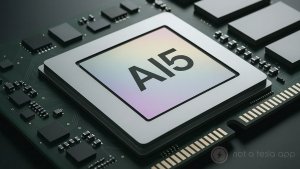
Tesla’s Executive Team also confirmed that a lite version of FSD V14 would also be dropping sometime in Q2 2026. While that’s still at least 5 months away, that means there is still plenty to look forward to for HW3 owners. Tesla likely needs time to optimize the current models further to function within HW3’s limited performance and memory envelope.
Coming Soon: Banish
The next updates for V14 are supposed to bring quite a lot to the table, including improvements in comfort. Alongside that, Tesla is also supposed to be bringing Banish, to enable users to get out at their destinations and let their cars park themselves.
Generalizing AI
Tesla’s AI isn’t just confined to the insides of vehicles, because FSD is the platform that Tesla is building its AI ambitions around. There are no industrial rivals that can really challenge Tesla’s lead in the production of real-world AI, and that’s where the company’s key selling factor lies.
Tesla is building entire world simulators that can closely simulate the real world using data gathered from the millions of vehicles driving billions of miles, which means they can generate and handle the weirdest and oddest edge cases, all from the safety of silicon.
The goal here is to translate those learnings to Optimus, Tesla’s humanoid robot. As Tesla can build faster, more efficient training systems, Optimus trains faster and better at the various tasks it must handle, from the factory floor to the kitchen.
Robotaxi: Slowly… then Everywhere at Once
Tesla is playing it safe with Robotaxi—to the extent that Elon has used the word 'paranoid' to describe the rollout process at every Earnings Call since Q4 2024. A single incident, whether at-fault or not, would become global headline news almost instantly and cripple Tesla’s ambitions for expansion.
However, the goals still remain. Tesla announced that it plans to have no safety monitors in vast swaths of Austin by year-end, and zero across the board in months. Plans call for 8-10 metro areas by December 2025, kicking off with Nevada, Florida, and Arizona. However, each new urban center will receive a five-month "safety occupant" grace period to iron out individual urban challenges and edge cases.
Tesla’s end goal here is to deploy the Cybercab, its ground-up, steering-wheel-less vehicle intended for Robotaxi operations, with production beginning in 2026. As that fleet expands, Tesla’s goal is to make residents of urban and suburban centers question whether they really need to own a vehicle. After all, if your trip to work costs $3 a day and you don’t need to wait for a bus or share your space with others, do you really need to own your own vehicle?
Tesla's Q3 revelations paint a world where FSD isn't a feature; it's the foundation. With unsupervised on the horizon, AI reasoning sharpening decision-making, and Robotaxi fleets scaling, the future of transport is due for a fundamental overhaul.