For the past decade, Tesla’s strategy has been defined by a simple, brutal, first-principles logic. If a critical component’s supply chain is a bottleneck, you must build the machine that builds the machine.
We’ve seen this tactic with them previously, with batteries at Giga Nevada, cells at the Kato Road facility at Fremont, and now the new Texas Lithium Refinery, which is coming soon. At the 2025 Shareholder Meeting, Elon Musk confirmed that Tesla has identified its next great bottleneck, and it may be the most challenging one yet: manufacturing computer chips.
AI5 and xAI
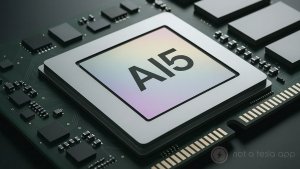
With the advent of the AI5 chip, Tesla’s demand for compute is now effectively infinite. This "monster" chip is a generational leap over AI4, driven by staggering, purpose-built specs:
10x raw compute increase
9x memory capacity
5x block quantization
This chip isn’t just for vehicles; it’s the central unit required to power millions of Optimus robots eventually. Since Tesla dropped Dojo, the same chip will also power supercomputer clusters in large AI data centers around the world. Elon also mentioned that Tesla is looking to spend 10’s of billions on AI compute alone, just to be able to train Optimus.
xAI recently announced that it’s building a huge 500 MW data center in Saudi Arabia, which may also include Tesla AI chips, furthering the need for more chips.
Tesla is working towards mass production of AI5 in 2027, with early samples expected to arrive for early testing in Tesla’s engineering labs sometime in 2026.
Faced with this increasing demand for AI chips, Tesla has now concluded that it cannot remain beholden to external chip fabricators. Now, Tesla is now thinking about another one of their vertical integration pivots: building a massive facility dubbed the TeraFab.
The Foundry Bottleneck
Tesla’s current AI hardware plan is already ambitious. The AI5 chip is slated for production at state-of-the-art facilities run by two of the world’s largest chip fabs, TSMC in Taiwan and Arizona, and Samsung in Korea and Texas.
In any normal context, securing capacity at four separate fabs from these two giants would be a massive supply chain victory. But for Tesla, it’s still not nearly enough capacity. Elon admitted that this four-fab plan is still not nearly enough for AI chip production to keep up with demand.
According to Elon, Tesla’s largest challenge right now isn’t battery minerals or cell production lines; it is a fundamental lack of AI chip manufacturing capacity.
Intel Joining the Party?
With its primary partners maxed out and availability from other manufacturers limited, Tesla is being forced to find a short-term bridge to survive the coming compute drought. With that said, Tesla is looking for even more partners in the short term, and one of the few fabs that hasn’t been tapped already is Intel.
Intel’s resurgent foundry services, based in the US, represent the only other viable large-scale partner capable of handling Tesla’s advanced designs.
This potential partnership, adding Intel to the TSMC-Samsung lineup, would create a more resilient, US-centric supply chain.
Tesla TeraFab
If the problem is a lack of chip fabs, Tesla’s ultimate solution is simple. Build its own.
Elon Musk floated the idea of a Tesla TeraFab, a gigantic chip fab dedicated entirely to Tesla’s AI hardware. This, he suggested, could be the only answer to Tesla’s massive AI chip demand.
This is the Giga Factory logic applied to silicon. It is an idea of such staggering capital cost and technical complexity that few companies would even dare to voice it. As Nvidia's CEO Jensen Huang, a man who knows this industry better than anyone, warned, building a foundry from scratch is an extremely hard challenge.
But Tesla's plan is not just to build a fab; it's to build a monster. The vision laid out includes 10 separate modules on-site, each capable of producing 100,000 chips per month, all to be located in the United States. This would be, in effect, the largest and most advanced AI chip factory on Earth, dedicated to a single customer.
Decentralized Supercomputer
This vertical integration isn't just about securing the FSD and Optimus roadmaps. It's about powering the new, compute-hungry business models that AI5 will unlock.
If data centers and vehicles share the same AI-optimized hardware, then Tesla can use its entire parked fleet as a decentralized, distributed AI supercomputer. To do that, every single vehicle must be equipped with an AI5 chip.
TeraFab may be the only logical path to a future of millions of Optimus robots and a fleet of distributed AI-inference vehicles if Tesla isn’t able to secure fabrication deals elsewhere.
Tesla has looked at the global supply chain, found it lacking, and has decided, once again, that the only way to build the future is to build it itself.