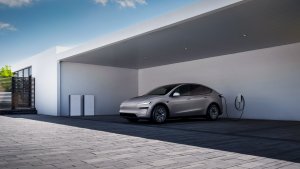
Google Maps is now rolling out live Supercharger availability data, reducing the friction of integrating non-Tesla EV drivers into the Supercharger network. This integration is a welcome convenience for the growing fleet of NACS-equipped EVs and is already live.
The Google Maps integration provides live availability of stalls at Supercharger sites, alongside information already provided, including charger speed in kW and daily popular times tracked by Google. This integration will likely follow for users of Apple Maps, which also offers EV charging and navigation support.
A Good First Step
While it is a fantastic step towards providing information for non-Tesla EV drivers, there are several significant details that aren’t provided on Google Maps.
First is the lack of pricing information. While Google provides popular times, it doesn’t provide time-of-use pricing or whether a site has Congestion Pricing in effect. This is important information, especially as two close-by Supercharger sites can drastically differ depending on their dynamic pricing based on live utilization.
An oversight exists in user clarity - on Google Maps, non-Tesla compatible sites (those with Magic Docks or those where NACS-equipped EVs can charge) are labelled as “NACS”. However, sites where only Teslas can charge (V2 Superchargers) are labelled as Tesla. For the uninitiated, that can be a surprise, especially if you arrive with a low state of charge, expecting to be able to top up and continue your trip.
The Rest of the Story
As Tesla’s Director of Charging points out, this is only the first step towards better integration. There’s a critical difference between reactive live data and proactive network management.
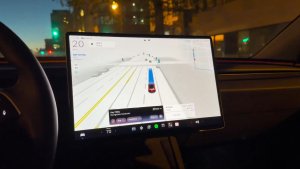
Tesla’s navigation routes vehicles to the most appropriate Supercharger site, based on live availability, travel time, state of charge, traffic and expected availability at arrival. Combined with upcoming features like Virtual Queuing, Tesla aims to aggregate demand data with charger availability.
Max’s analogy of referring to the Trip Planner as an air traffic controller is very appropriate. As vehicles come into range and require charging, they’re routed to the correct runway (charging site), and queued appropriately for arrival well ahead of time, so that they won’t run into any delays. That helps to avoid congestion and to get users to their destinations as fast as possible, especially on high-traffic days like holidays.
Not knowing incoming demand is like having an aircraft show up at your airport unannounced and land, cutting off the ones coming in to charge. That throws a wrench into the entire planning process, and everything has to be recalculated.
While Tesla already shows vehicles navigation to a particular Superchager and takes these vehicles into account when routing users, they can currently only take into account Tesla vehicles navigating with their In-car GPS.
Tesla will need to work alongside navigation and mapping providers like Google (and in the future, Apple) to gather incoming navigation information, including state of charge and arrival times. Getting reciprocal data sharing will be key to enabling this.
While live data is a fantastic start, there is a lot to do for cross-provider integration to better manage the Supercharger network in the future. This is just the first step.