A quiet change in Tesla’s diagnostic software should reignite the hope for millions of legacy HW3 owners waiting for an FSD computer upgrade.
According to a report from a user of ToolBox 3, Tesla’s technician and diagnostics software, software update 2025.44, has unlocked the ability to change the Autopilot computer configuration in the public-facing version of ToolBox 3.
This toggle was previously unavailable and was likely restricted to internal teams, and allows a technician to manually inform the vehicle’s firmware that the physical computer has been swapped (e.g., from HW3 to AI4). Its sudden appearance in the tool used by third-party repair shops and DIY-ers suggests that Tesla is laying the groundwork needed for future retrofits.
The AI5 Delay
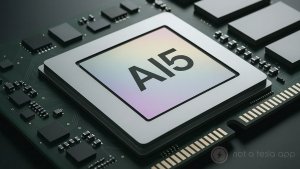
This discovery also perfectly aligns with recent timeline shifts in Tesla’s plans for AI5. Elon Musk recently confirmed that the next-gen AI5 chip would be delayed until mid-2027, meaning the “wait for AI5” strategy for legacy vehicles is looking less likely.
HW3 vehicles - some now eight years old - simply do not have the hardware capabilities to run the latest high-fidelity FSD neural networks. They lack the processing power and memory to do so, and Tesla has to create extremely optimized and cut-down versions for the older hardware.
Leaving these early owners and proponents of FSD stranded on aging hardware for another two to three years would be a gross misstep from Tesla’s side. The delay may be forcing Tesla’s hand: they must bridge the gap with an intermediate solution, and that could potentially be a custom HW4 retrofit.
Tesla previously announced that it won’t upgrade HW3 until autonomy is solved, so it can determine the exact hardware requirements. However, as FSD v14 approaches true autonomy, Tesla may become more comfortable with HW4's hardware capabilities.
FSD V14 Lite for HW3
However, before anyone gets their hopes too high, Tesla has already confirmed that they are looking at putting together a V14-Lite for HW3 owners sometime in mid-2026, meaning that a retrofit is still the last-ditch option and it won’t happen at the earliest until the third quarter of 2026 and potentially much later.
Software Before Hardware
For a retrofit to exist, the software must first allow it. You can’t simply plug a new computer into an old car - everything must be in place to accept the new hardware configuration. That involves unlocking the configuration capability in service tools like ToolBox 3. After that, Tesla can look into producing a physical retrofit kit - likely a cut-down and simplified AI4 or AI5 board with an adapter harness to fit the tighter HW3 cooling and power packages.
A Painful Promise
Elon has previously mentioned that upgrading HW3 vehicles would be painful and difficult due to physical constraints, but has promised that they’ll get something done.
With the software gate now theoretically open for configuration, the next missing piece will be the hardware kit itself. If this ToolBox update is what it appears to be, the retrofit might be moving from a concept to reality.