2025 has been a big year for Tesla. We saw a massive torrent of new hardware refinements, software evolutions, and the long-awaited realization of a true autonomous future.
From the safety-critical introduction of features like Child Left Behind Detection to the whimsical fun of Tron mode, Tesla has been releasing features one after another. Of course, we can’t ignore the launch of FSD across three new continents - the pace of innovation has been relentless.
We finally also witnessed the unification of FSD across the lineup, the start of a migration to a newer visualization stack, and the key to everything: the Robotaxi Network. As we stand on the precipice of 2026, let’s take a look back at all the defining moments of a year that changed everything.
Q1 2025 - January, February, March

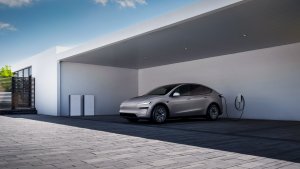
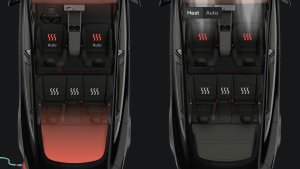
The launch of the refreshed Model Y in North America and Europe was the anchor of Q1. Beyond the aesthetic alignment with the refreshed Model 3, Tesla consolidated its global manufacturing lines in just a few short months. It brought acoustic glass, ventilated seats, a rear screen, and safety and efficiency improvements to the world’s best-selling car, ensuring that the Model Y remained fresh and relevant.
Perhaps more significant for Tesla’s vision was the simultaneous launch of FSD in Mexico and China. The entry into the Chinese market, in particular, was the first global step taken by FSD. Navigating the complex data sovereignty laws of the world’s largest EV market has been a challenge, but Tesla proved their autonomy stack isn’t just a North American novelty, but instead a truly universal platform.
Q1 was also a surprising relief for the owners of many legacy vehicles. Elon Musk promised owners of HW3 vehicles that they would receive a free hardware upgrade if Tesla was unable to work out Unsupervised FSD on the older hardware stack. The key takeaway was that those owners must have purchased FSD outright.
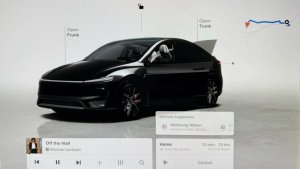
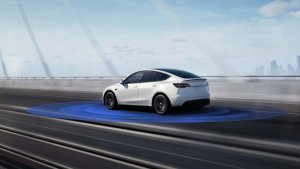
Wrapping up the quarter, Android owners finally received Hands-Free Trunk Support via Ultra-wideband (UWB), arriving almost exactly a year after the feature launched on Apple devices. Tesla also rolled out In-Cabin Radar for enhanced occupancy detection and classification.
Q2 2025 - April, May, June

As spring arrived, the focus shifted from refinement to looking forward to Tesla’s future. This was by far Tesla’s most historic quarter - the launch of the Robotaxi Network
The Robotaxi Network went live in Austin, with specially modified Model Y vehicles autonomously moving early-access riders around a relatively small geofence. However, that geofence quickly expanded, and so did the ridership. Tesla finally moved the idea of an autonomous network of robotic taxis from a proof-of-concept to a real service.
While Austin saw the future, the rest of the fleet also received a big 2025 Spring Update. This release introduced B-Pillar Dashcam recording, Avoid Highways, and Child Left Behind Detection. A point release also finally returned 12V accessory power as a toggleable option, bringing back a much-loved feature.
Tesla also launched the lightly refreshed Model S and Model X, and introduced the Luxe Package alongside them. While the refresh wasn’t a massive change, it still helped to bring the Model S and Model X interiors up to the standard of the Cybertruck and recently refreshed Model 3 and Model Y.
Q3 2025 - July, August, September

The third quarter saw a lot of major feature updates, and a lot of looks at the future of what was to come from Tesla - whether it be autonomy in vehicles, robotics, or even Energy.
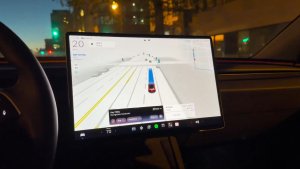
Tesla began transitioning to a new visualization system using Unreal Engine. While that’s still just in progress today, they’ve already set the foundation for it in the Model S and Model X, with the feature likely to be a major release in 2026.
Early in the quarter, they also launched a major new feature: Low Power Mode. Another much-requested feature was built due to customer demand. But that’s not all - a surprise launch of the Model Y L in China was a major headline. The arrival of a true 6-seat variant with an extended wheelbase was something truly special - and we’re still hoping Tesla will bring it to North America after the EU has received type approval.
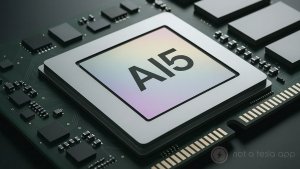
We also got our first looks at FSD V14 and the forthcoming AI5 hardware, promising a major leap for in-vehicle inference and compute. However, the software team and Elon didn’t leave legacy owners in the dust - they also confirmed V14 Lite for mid-2026 for HW3 owners. This strategy gives Tesla time to refine V14 on the more capable AI4 hardware, then narrow down the key aspects for the less powerful HW3 variant.
That wasn’t all, though - Tesla also launched FSD in Australia and New Zealand, marking the fourth and fifth countries in which it enabled its autonomy software.
Shortly afterward, we saw the launch of FSD V14, a huge improvement in FSD performance. It included major new features like Sloth and Mad Max modes, as well as Parking at Destination, alongside a revamped UI.
The Summer Update also brought with it a major feature that everyone was waiting for - in-vehicle Grok. Grok included a slew of personalities, from a simple assistant mode to language tutoring or storytelling - all available at the tap of a button. Tesla is also planning to add a massive new batch of visualization assets to help you better understand the world that your car sees.
In the Energy world, Tesla ran their Las Megas Event, unveiling Megapack 3 and Megablock. Alongside 500kW charging for the Cybertruck, Tesla’s energy business has been quickly pushing at new milestones - like the opening of the Tesla Diner.
Wrapping up the major news in Q3, Tesla took on a Trillion-Dollar bet on Elon Musk. A new pay package, with insane incentives - and equally insane milestones to match. Bringing Tesla to a valuation of 7 trillion dollars was a requirement, and in Q4 2025, shareholders voted yes.
Q4 2025 - October, November, December
The final quarter of 2025 was all about setting the stage for the next five years. With the Robotaxi pilot successful and FSD beginning to mature as a point-to-point system, Tesla turned its gaze to the future.
That focused on the hardware required to run and train FSD - with major deals inked with key chip fabs to help Tesla maintain an edge in AI. AI5 will be the stepping stone, while AI6 would be a major leap in top-down integration from training to vehicle.
The 2025 Fall Update brought with it 3D buildings, Tron Mode, and a batch of new Charging Visualizations. It was a massive update that brought a batch of fun features to the fleet.
However, for software, the real kicker was the launch of the 2025 Holiday Update. The Holiday Update brought Grok Navigation Commands, an updated Santa Mode, Dashcam FSD overlays, and Supercharger Site Maps (and more)
Just before the year closed out, Tesla took a step toward achieving what many thought was impossible: the launch of FSD in Europe. Overcoming the strict UNECE regulations required a massive validation effort and close work with regulators, but looks like FSD may finally arrive in Europe in 2026. For now, many European customers can take advantage of FSD demo drives with Tesla employees in Italy, Germany, and France (with more countries to come).
Looking Forward to 2026
As we look to close the book on 2025, Tesla’s trajectory is clearer than ever. The hardware is refreshed and as unified as it ever has been, the software is scaling globally, and compute is being rolled out faster than ever.
If 2025 was the year in which Tesla proved that their ecosystem works, 2026 will be the year that it scales globally.