When Elon Musk responded to a user calling the Cybercab a piece of art by saying, “And there is so much to this car that is not obvious on the surface,” he wasn’t just deflecting praise or being humble. Instead, it seems like Elon is talking about everything we don’t yet know about the Cybercab.
The Cybercab’s sleek, plastic exterior is striking, but the real art is hidden underneath the panels. From changes at the manufacturing line to the internal wiring and more, the Cybercab is the culmination of every engineering efficiency that Tesla has developed over the last decade.
Let’s take a look.
The Unboxed Assembly
The most significant innovation isn’t the Cybercab itself, but how it will be built. The Cybercab is the flagship vehicle for Tesla’s new Unboxed Assembly process, a module-assembly method designed to revamp the tried-and-true manufacturing line and cut costs and time.
Unlike traditional cars that move down a linear line as a painted shell, the Cybercab will be built on parallel lines, creating sub-assemblies of the vehicle: the front, rear, sides, and floor. These are then snapped together at the final stage. This allows more people or robots to work on different parts of the car simultaneously, drastically reducing the factory footprint and production time.
48V Architecture & Etherloop
The Cybercab will likely use Tesla’s 48-volt low-voltage architecture, which was pioneered on the Cybertruck. By quadrupling the voltage from the industry-standard 12V, Tesla can reduce the size of the wiring harness significantly.
In addition, 48V enables data-over-power with Etherloop, eliminating miles of heavy, expensive copper wire. That means a vehicle that is lighter, easier to manufacture, easier to automate, and easier to service remotely.
Structural Battery Pack
Another unique technology behind the Cybercab is the structural battery pack. By integrating the cells directly into the chassis, likely using Tesla’s 4680 format, the vehicle becomes more rigid. This makes the cabin safer and stronger, ensuring that even in an accident, occupants are less likely to be injured.
Inductive Charging
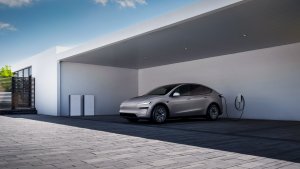
Perhaps one of the most interesting features of the Cybercab is the fact that it will not have a charging port. Instead, Tesla will use inductive charging to charge the autonomous vehicle. That means no need for complex charging snakes - instead, optimal parking is handled by FSD.
The Cybercab will be the first, and perhaps only Tesla vehicle, to use inductive charging. The feature was originally supposed to launch with the Cybertruck but was canceled.
Paint-Infused Plastics
Tesla will use a unique paint-infused plastic for the Cybercab's exterior panels. These panels are easily replaceable - and because the paint is infused throughout the plastic, even if they are scratched, they will still remain the same color. This also eliminates the need for a traditional paint shop, as the panels need no additional finishing.
Serviceability & Cleanability

One of the key pieces that makes the Cybercab so useful is its interior design. A personal car sits parked 95% of the time, while a Robotaxi is running 95% of the time. That means a rapidly cleanable and easily serviceable interior — one that can be serviced and charged at centralized urban hubs. Having wireless charging and robotic cleaning on site for day-to-day needs, with employees or Optimus robots handling other tasks are likely the future that Tesla is aiming for.