In a recent post on X, Elon Musk provided an update on the requirements Tesla believes it will need to achieve superhuman levels of safety for Unsupervised FSD. In addition, Tesla’s Director of AI, Ashok Elluswamy, confirmed that some reasoning capabilities - the holy grail of AI decision-making - have already shipped as part of FSD, and more are to come.
10 Billion Miles: 7 and Counting
Back in Elon’s Master Plan Part Deux, he referenced a single number — 6 billion miles. That was the amount of data required to achieve worldwide regulatory approval for true autonomy through Unsupervised FSD. That also meant a system that was exponentially safer than humans, steadily progressing through the march of 9’s to handle edge cases and real-world chaos.
Now, that number has finally been revised.
Roughly 10 billion miles of training data is needed to achieve safe unsupervised self-driving. Reality has a super long tail of complexity.
— Elon Musk (@elonmusk) January 8, 2026
The number that Elon and Tesla are looking for here is real-world miles. While Tesla, like other autonomy competitors, uses simulated data for training, real-world data is key to handling real-world edge cases.
Where is Tesla Now?
According to Tesla’s FSD Safety Hub, the fleet has driven approximately 7.1 billion miles on FSD. That means that Tesla needs another ~2.9 billion miles to hit its new data target.
With the FSD take rate slowly increasing and the fleet expanding every year, that might be achievable sooner rather than later. In March 2025, Tesla achieved 3.6 billion miles on FSD, and now sits at that current 7.1 billion target. At the current rate, Tesla will likely hit 10 billion miles within the next 6 months.
This relatively stark admission from Elon highlights the brutal reality of chasing edge cases along the march of 9’s. Getting 99% of the way there is simple - but solving the 99.9, then 99.99, and so on gets exponentially harder every step. This comes just days after a similar note of caution was provided by Elon and Ashok to NVIDIA, following the debut of Alpamayo at CES 2026.
The relatively infinite variety of edge cases is something that is extremely difficult to solve - whether it be unmapped routes or changes, erratic human (or animal) behavior, challenging weather, or anything in between.
Reasoning with V14
To bridge the gap between 7 billion and 10 billion miles, Tesla isn’t just adding more data; it’s looking to change how FSD makes decisions and how it thinks.
Ashok noted that FSD V14.2, currently available on customer vehicles, already includes some of the first implementations of reasoning capabilities.
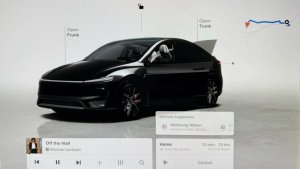
Some elements of reasoning such as navigation route changes during construction, parking options have already shipped in 14.2. More and more reasoning will ship in Q1.
— Ashok Elluswamy (@aelluswamy) January 9, 2026
What is Reasoning Really?
Until now, FSD has largely operated as a rapid-fire reflex system — seeing a red light or something in the road and stopping. Reasoning allows the car to evaluate multiple future scenarios before acting, and think ahead about how it plans its route and decisions in real time, just like a human.
We did a deep dive into System 1 (Reactive) and System 2 (Proactive) thinking, but in short, it enables better human-like driving. That means that instead of just stopping at a location where the road is abruptly closed, the car can now reason that it needs to divert, observe the environment around it, and select a new path.
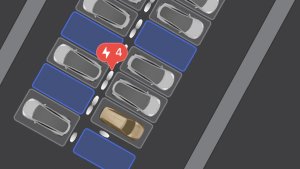
In Ashok’s particular example of parking, that also means intelligently choosing where to pull over - such as finding a safe parking spot near a curb, not at a driveway, and not just at the final pinned location.
The Takeaways
Elon’s 10-billion-mile comment is an admission that reality is hard — harder than anyone at Tesla ever expected. However, Ashok’s update confirms that a solution — Vision-Language-Action models that can think rather than just react — is no longer a far-off idea.