We recently covered Tesla’s actual roadmap for 2026, focusing on what is likely to happen. Today, we’re throwing caution to the wind and concentrating on what we’d love to see — all the fun wishes, silly features, and other things that may not actually happen.
While many worry about margins and regulations for robotaxis, actual owners often dream of simpler things: a bird’s-eye camera that rivals a 2018 Nissan, functional auto-wipers, and a Roadster that exists outside of a CGI render and model at the Petersen Auto Museum.
Here’s our ultimate wishlist for 2026.
The Forever FSD Transfer
This is easily the most-requested feature among Tesla owners. We want Tesla to finally make FSD a license that’s attached to an owner’s Tesla account, not to a VIN. Currently, Tesla uses FSD transfers as a temporary demand lever, offering it during end-of-quarter pushes.
In 2026, the dream is for Tesla to treat FSD like a real software license. If you buy it, you own it forever, no matter which Tesla you get into.
A Real Affordable Vehicle
The Model 2/Q was the promised land - a $25K compact car that would dominate Europe and Asia and serve as the perfect entry-level EV. While the stripped-down Model 3 and Model Y helped to increase affordability, a compact hatchback with a smaller footprint is arguably the biggest gap in Tesla’s current lineup.
We aren’t asking for a robotaxi that is scheduled to arrive this year; we are asking for a simple, manually-driven (or FSD-driven) affordable EV for today’s world.
A Family Vehicle
On the flipside, Tesla has another gap in their roster - a smaller one than the affordable model, but physically much larger. That’s a true family vehicle. The Model X and Model Y L are larger than Tesla’s other options, but they leave much to be desired, especially with comfort when seating their maximum passenger capacity.
A proper 6/7-seat large-format SUV, like the CyberSUV, would be a fantastic option for larger families who want the safety, comfort, and autonomy of a Tesla without giving up storage space or needing a second vehicle when traveling. There’s hope for this one as Franz has said that we’ll have to “wait and see.”
The Roadster… Delivered
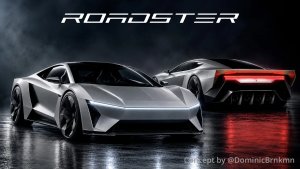
It has been nearly a decade since the Roadster was revealed. We don’t want another unveil, another demo, or an April Fools production start target. There are plenty of Founder-Series Roadsters owed to Tesla’s long-time supporters, as well as plenty of others who have put down the massive $40,000 deposit to get into line.
Actual customer deliveries are something we’d love to see from Tesla for the Roadster. It seems the promise of a car to end all cars just keeps slipping.
FSD Computer Retrofits for HW3
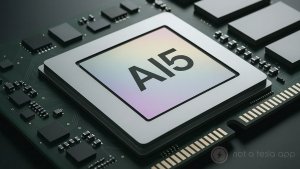
As FSD advances, older vehicles on Hardware 3 are beginning to feel the age of their lower-resolution cameras and slower inference speeds. While a full computer swap is likely expensive and difficult, a paid path to upgrade cameras and computers to AI4 or future AI5 standards would help to keep millions of Teslas on the road for longer.
That’s a big step towards reducing e-waste, increasing the value of used vehicles, and committing to promises. For now, we’ll have to wait for FSD V14 Lite, scheduled for release in the next 2-5 months.
MCU 4
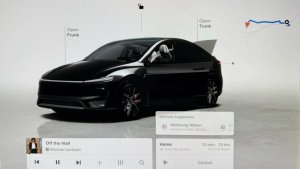
On the hardware note, we think it's time for another upgrade. The infotainment computer is the heart of the Tesla experience, and while the current Ryzen chip is great, technology has moved fast. We’d love to see the debut of MCU4, bringing even more processing power, faster graphics, and better multitasking capabilities to ensure the experience remains buttery smooth for years to come.
A True 360° View
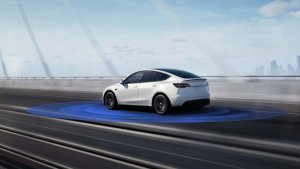
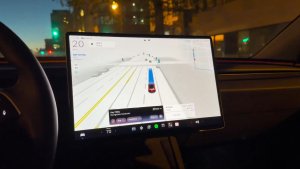
Tesla’s Vision stack is impressive, but parking in tight spaces often remains a guessing game for many compared to legacy vehicles. With a front bumper camera now available across Tesla’s lineup, a true, stitched 360° Bird’s Eye View for parking would be helpful to many owners while we continue to wait for true autonomy.
V2H / V2L For All
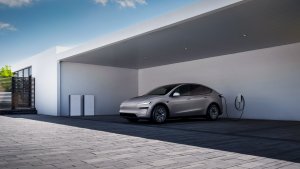
Currently, only the Cybertruck supports true Powershare V2H capabilities, with the Model Y L and Model Y Performance sporting some V2L capabilities with an adapter. A Model Y sitting in your driveway has the capacity of roughly six Powerwalls. In 2026, we want Tesla to bring proper V2H and V2L support to the rest of the lineup, allowing owners to power their homes, tools, and everything else they need, wherever they are.
First-Party Starlink Integration
Connectivity is everything for a modern Tesla. We’d love to see native Starlink integration - perhaps with a premium connectivity tier with hotspot services that ensure our vehicles are never offline - even in the most remote national parks or city dead zones.
A Tesla App Store
Since Apple CarPlay and Android Auto are not part of the Tesla experience, a proper developer ecosystem should be built instead. Tesla’s native UI is excellent, but walled off to a few specific service providers.
A dedicated App Store would enable developers to build native versions of Waze, PlugShare, a better Weather App, and more. We don’t need phone mirroring if the native apps are good enough, and opening the garden walls would unleash a huge amount of creativity from the community.
More Tesla Theater Functionality
In the same note, the Tesla Theater app is great, but it's still limited to a few core streaming services (even if there is a workaround to stream any video service). A proper browser-based theater experience that supports any video player and more video codecs would be a great step forward. Adding in support for user-hosted apps like Plex, or even the ability to cast from a phone in the Theatre, would be an amazing gift.
Steam Support
Steam support was briefly a flagship feature for the Model S and Model X, promising console-quality gaming on the go. Then, it was quietly cut from the lineup. We want it back.
With the powerful Ryzen chips inside these cars, there is no reason we shouldn’t be able to play select games from our Steam libraries while Supercharging. It was the ultimate party trick, and its removal felt like a step backwards. After all, wouldn’t you like to play some Steam games in your Robotaxi?
Arrival Energy In-App
Currently, you have to be in the car with a destination entered to see your estimated battery percentage at arrival or adjust the arrival energy for your trip. We’d like this feature to be available in the Tesla App when we navigate or plan a road trip.
It makes the entire experience even more seamless through the app, letting users plan their entire trip without having to hop into their vehicles for the final few tweaks.
Wraps, Lightshows, Lock Sounds - In-App
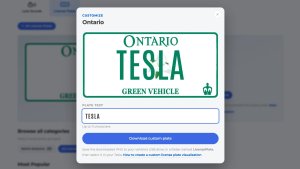
On a similar note, currently adding custom wraps, license plates, lightshows, and lock sounds requires you to remove your Dashcam USB and plug it into a computer. Recently, Tesla has added a way to import images taken from the new Photo Booth App that was introduced with the 2025 Holiday Update - so why not the reverse?
Let us use the phone app to add and remove these at will, rather than having to plug and unplug. We’re in 2026 now, so let’s get some even tighter app integration.
Return FSD Speed Control
With FSD V14, the car strictly adheres to its own internal logic based on the Speed Profile you set, sometimes driving frustratingly slow or overly fast. This is especially bad when your car misreads or misses speed limit signs, making it think it’s a 30 mph zone when it really may be 40 or 50.
We want the return of the scroll-wheel speed offset, or a way to correct the incorrectly read or missed sign. Whether that be tapping the speed sign on the screen, or telling Grok it has the speed limit wrong - while we wait for true autonomy, we’re still responsible - so let us stay in control.
Tesla Home Heatpump
Tesla has mastered heat pump technology in its vehicles, creating the Octovalve and some of the most efficient thermal management systems in the world. We’d love to see them apply that engineering magic to the home - just like Elon once said he would in the past.
A Tesla-branded HVAC system that seamlessly integrates with the Tesla App, Powerwall, and Solar would be an instant hit, disrupting a stagnant, slow industry just as they did with cars and home battery backup.