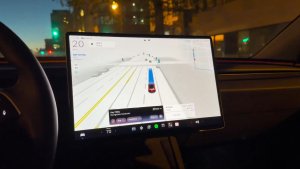
David Moss, the Tesla owner who has captivated the community with his work to push FSD v14.2 to its limits, announced on X that his intervention-free streak since picking up his new vehicle has finally ended.
David managed to record 12,961 miles - intervention-free, coast-to-coast across the United States, and more in between.
The Winter Factor
While FSD v14.2 successfully navigated complex city streets, thousands of miles of highways, and complex roundabouts and parking lots across the United States, it met its match. The streak finally ended in one of the toughest driving environments in the United States: rural Wisconsin in January.
According to David, the combination of snow-covered roads and temperatures in the teens created a tricky situation that required a human takeover. David put safety first and intervened to keep his vehicle under control, making a prudent decision - there was no accident or near-miss.
Here’s more detailed look at the weather condition today in Rural Wisconsin that caused my Tesla FSD intervention free streak at 12,961 miles pic.twitter.com/pM7XXOQqMr
— David Moss (@DavidMoss) January 17, 2026
Looking at the wintry conditions in the video David posted following the disengagement, the weather isn’t exactly pleasant. Snow on the roads, thick enough to cover lane lines; low temperatures; and likely ice or black ice under it all make for challenging driving for both humans and autonomous vehicles.
Coast-to-Coast Intervention Free
Despite falling just shy of the 13,000-mile mark, the magnitude of this achievement is difficult to overstate. Over the course of 7.5 weeks, David travelled through 30 states without providing a single steering, braking, or acceleration input.
Most significantly, he was also the first person to drive coast-to-coast fully autonomously - with zero interventions. All he had to do was enter his destination, press the blue Start Self-Driving button on-screen, and his Tesla took him there.
In ~2 years, summon should work anywhere connected by land & not blocked by borders, eg you're in LA and the car is in NY
— Elon Musk (@elonmusk) January 10, 2016
While Elon Musk famously predicted that Summon would work coast-to-coast a decade ago, David made autonomous driving coast-to-coast a reality with his trip. Now, it seems that Elon’s hope for an autonomous summon from one faraway location to another might just become a reality, a full decade later.
FSD is the Future
For skeptics and fans alike, this streak serves as a tangible benchmark for what Tesla’s neural networks are capable of in 2026. A year ago, a 13,000-mile intervention-free run would have been statistically improbable. Today, it took a specific combination of challenging rural infrastructure and freezing weather conditions to break the streak.

This 12,961-mile journey offers the best evidence yet that the era of FSD (Supervised) is nearing its end. Now that it can handle cross-country travel, complex urban environments, and 30 different state road networks without failure, the conversation shifts.
The question is no longer whether the software works, but rather how it handles extreme edge cases, such as severe winter weather, that still challenge skilled human drivers.
As Tesla’s neural networks continue to learn from these edge cases and we approach the 10-billion-mile mark, the gap between human and machine capabilities will continue to narrow.