In a historic milestone we’ve been waiting nearly a decade for, Tesla has finally begun offering unsupervised Robotaxi rides to the general public in Austin, Texas.
As of Thursday, January 22, 2026, riders hailing a Tesla Robotaxi via the app in Austin have a chance to be picked up by a Model Y with absolutely no one in the vehicle.
I am in a robotaxi without safety monitor pic.twitter.com/fzHu385oIb
— TSLA99T (@Tsla99T) January 22, 2026
No Safety Monitor
Until now, Tesla’s “Robotaxi” tests in Austin have always included a human safety monitor, whether in the passenger or driver’s seat, supervising the vehicle. While these safety drivers don’t interact with the vehicle’s controls directly, they’re ready to make the vehicle stop or pull over at the touch of a button.
For a short period of time, employees were receiving fully unsupervised rides in December, and we also saw Robotaxis with nobody in them at all. We never saw that program expand - until today. Now, that safety net is completely gone.
The launch was confirmed by Tesla’s VP of AI, Ashok Elluswamy, who commented on the first video posted. He stated that Tesla is mixing a few unsupervised vehicles in with the broader robotaxi fleet with safety monitors, and slowly phasing out the monitors over time.
With the mixed-fleet approach, when a user requests a ride within the Austin geofence, they may get one of these new unsupervised robotaxi units. Since there’s no safety monitor, you can now sit up front for the first time as well.
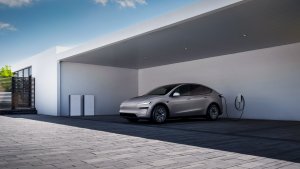
Just like the rest of the fleet, these are standard Tesla Model Ys, running the latest Robotaxi FSD builds.
Trailing Vehicles
My first unsupervised @robotaxi ride here in Austin! Come along with me on this 1st experience of driving around Austin with just me in the car and in the back seat!
— Joe Tegtmeyer 🚀 🤠🛸😎 (@JoeTegtmeyer) January 22, 2026
Congrats to the @Tesla_AI team! 🤠👍 pic.twitter.com/YVJ19zp2qZ
While Tesla has removed the safety monitor from these vehicles, and there’s literally no one in them when they pull over to pick you up, Tesla is still monitoring these vehicles visually for now. These robotaxis are being followed by multiple Tesla vehicles, presumably monitoring them from farther back (as seen in the video above).
The vehicles in the back presumably have controls similar to the safety monitor's, allowing them to stop the vehicle in its current position or have it pull over.
It’s not surprising Tesla has a safety net in place at launch, but we’ll have to wait and see how long Tesla keeps these trailing vehicles around.
The Big Moment
This launch finally puts Tesla in the exclusive club of companies operating truly driverless public transit, joining Waymo and Zoox.
However, Tesla’s strategy and timelines have differed greatly. While Waymo relies on expensive LiDAR arrays and time-consuming pre-mapped HD geofences, Tesla achieves the same functionality with only cameras and AI. If this pilot in Austin continues to scale successfully without major incidents, it validates Tesla’s approach - and we can likely expect Robotaxi to begin rolling out further in Texas and eventually into other US states in the future.