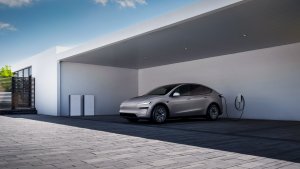
Following the historic launch of unsupervised public rides in Austin last week, some keen-eyed observers have noticed a critical hardware difference between the Model Y in your driveway and those picking up passengers.
The new Model Y Robotaxis are equipped with automatic camera sprayers, not only on the rear camera, like we previously reported, but also on the fender (repeater) cameras. While the B-pillar cameras on the Model Y don’t appear to have camera washers yet, the Cybercab has now been spotted with water jets on those cameras as well.
All cameras (excluding the cabin camera) on the Cybercab now have an active camera cleaner. The list includes the front bumper camera, repeater and B-pillar cameras, the rear camera, and the front cameras underneath the windshield.
The Hardware Upgrade
Repeater camera cleaning in action on Robotaxi Model Y cars
— Greggertruck (@greggertruck) January 23, 2026
Spray nozzle in action: https://t.co/qqE32wDheD pic.twitter.com/zyIMIXAMUO
While consumer Teslas of all models have long lacked an active cleaning mechanism for their side and rear cameras, the Model Y Robotaxi fleet appears to be running a specialized retrofit (or a new production batch) designed to address lens occlusion.
Similar to the system recently spotted on the Cybercab prototype in Chicago, the rear license plate camera features a dedicated spray nozzle to clear road grime. Now, we’re seeing these cleaners added to other cameras as well. The repeater camera specifically has been redesigned, with the integrated turn signal light removed and the washer jet added.
These new mechanisms spray washer fluid onto the camera lenses under pressure, intended to clear anything that could be stuck to the lens.
The Cybercab adds similar jets to the B-pillar cameras, as shown below, where water has streaked down the side of the car.

Why Now?
The timing of this new development is clearly not a coincidence. As long as a human was in the driver’s seat of a consumer car with FSD (Supervised), a blocked camera was a minor annoyance or nag - the car would simply inform the driver to clean the cameras or take control.
In an Unsupervised scenario, a blocked camera can be a mission-critical failure. If a bird dropping, mud splash, or salty road spray blinds a sensor, there is no human to hop out and wipe it off. Without these washers, a single splash of Texas mud could technically incapacitate a vision-only robotaxi, leaving it stranded.
New Model Y rear camera washer in action on Robotaxi.
— Sawyer Merritt (@SawyerMerritt) January 24, 2026
Thx for the video @DavidMoss! pic.twitter.com/TxCxa8vtpC
Project Halo was Real
This rollout confirms the long-standing rumors of Project Halo - a program to upfit hardened Model Ys specifically designed for the Robotaxi network. While initially dismissed as testing mules, the presence of some modifications on these public-facing vehicles suggests that Tesla finally views active sensor cleaning as a mandatory requirement for higher-level autonomy.
For current owners, the big question remains: Will this plumbing upgrade eventually make its way to the consumer production line? Will this become available as a future retrofit for the rest of Tesla’s lineup?