Last night, Tesla held its 2025 Q4 Earnings Call, where Tesla discussed their past quarter and talked about what’s coming next. Elon Musk opened up the call by announcing a formal update to Tesla’s mission statement:
Amazing Abundance, in a future that’s marked by universal high income, generated primarily by robots like Optimus, driving down the cost of goods and services.
Musk went on to make a shocking announcement. He said Tesla will stop producing the Model S and Model X next quarter, and the Fremont production lines will be switched to produce Optimus. Although many saw the writing on the wall as the prices of these vehicles kept increasing, and features that were once exclusive to the S/X line have now trickled down to the Model 3 and Model Y.
While the financials showed a slight revenue dip as the company transitions between waves, the 2026 roadmap is arguably the most aggressive in Tesla’s already fast-moving history.
If you happened to miss the call or want to catch up with everything Tesla announced, including all the questions and answers during the Q&A session, we’ve got you covered right here, as usual.
FSD & Robotaxi
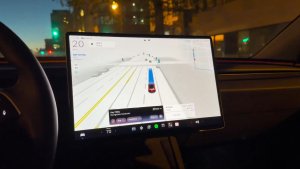
Elon confirmed that fully driverless Robotaxis (no human inside and no chase car) officially began operating in Austin as of yesterday (January 27, 2026).
He also confirmed that there is no use of chase cars or anything similar
The first driverless Robotaxi rides are randomly selected from regular paid rides
Tesla is still being cautious in the rollout to prevent incidents or accidents
Autonomy will increase gradually month-to-month
Tesla noted that the revenue and cost per mile metrics are not meaningful enough for discussion this quarter
Opportunity to add or remove your car from the Robotaxi Fleet
Cars with AI4 will be able to do this
Will provide an opportunity for customers to earn money or pay their lease/loan costs
Tesla intends to have autonomous vehicles in somewhere between a quarter to half of the United States, pending regulatory approval
This compares to last year's statements, where Robotaxis would be ubiquitous across the US by the end of 2026
Tesla is being more cautious with their wording here, partly due to regulatory rollouts or weather conditions
For now, Tesla is working on a city-by-city/state-by-state basis due to the lack of overarching federal regulation
Tesla announced the next cities that will get to experience the Robotaxi network
State | Metro Area | Status / Target |
|---|---|---|
California | SF Bay Area | Safety Driver (Current) |
Texas | Austin | Ramping Unsupervised |
Texas | Dallas | 1H 2026 |
Texas | Houston | 1H 2026 |
Arizona | Phoenix | 1H 2026 |
Florida | Miami | 1H 2026 |
Florida | Orlando | 1H 2026 |
Florida | Tampa | 1H 2026 |
Nevada | Las Vegas | 1H 2026 |
Tesla provided FSD subscription numbers for the first time
1.1 million active FSD vehicles
70% of these are purchases (770,000)
30% of these are month-to-month subscriptions
Approximately $32,670,000 in monthly recurrent revenue
Tesla AI Chips
Tesla intends to build a Terafab in the US to integrate logic, memory, and packaging
This will mitigate future supply bottlenecks and geopolitical risks with importing chip parts, and vertically integrate the supply chain
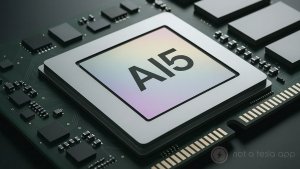
Elon noted he’s working personally on AI5 design still, which is planned for volume production in 2027
AI5 targets a 50x performance improvement over the current AI4 chip
10X raw compute and 9x memory capacity
Tesla is building Cortex 2 in Texas.
The plan is to more than double the on-site H100-equivalent compute capacity in the first half of 2026
Optimus
Optimus 3 to be unveiled in a few months
This will also be the first showcase of the updated hand design that Tesla has been working on
The dedicated production line in Fremont will use the space being vacated by the Model S and Model X lines
Volume production is expected to begin before the end of 2026
This is a new supply chain with new parts, and it will be a longer and slower manufacturing S-curve, as every part is new
The eventual capacity for the Fremont line is 1 million robots per year
Elon reiterated that Optimus will be a general-purpose robot
Demonstrate, show it, or describe a task, and they will be able to do the task
Primary driver of Amazing Abundance
Significant driver of US GDP
Battery, Powertrain, & Manufacturing
Tesla confirmed it will wind down production of the Model S and Model X next quarter.
This is to increase factory floor space in Fremont to support the construction of the Optimus production lines.
Tesla’s future is based on autonomy, not manually driven cars
For buyers, Tesla will continue to support the S and X programs for the foreseeable future
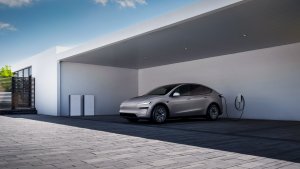
Tesla’s rollout of the refreshed Model Y with the bigger screen is now complete across all its markets
Other variants, like the Model Y L, were not mentioned in the deck or call
Cybercab production lines are being installed at Giga Texas
Volume production is scheduled to begin 1H 2026
Cybercab is being designed for a 50-to-60-hour per week duty cycle
The typical car sees a 10-hour per week duty cycle
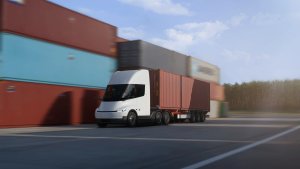
Tesla Semi is beginning production ramp throughout 1H 2026
New Megachargers are being deployed across the United States to support Semi rollout along major freight corridors alongside partners like FlyingJ
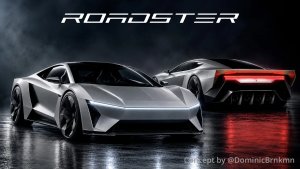
The Roadster remains in “Design Development”, even with a second unveiling date of April 1st, 2026
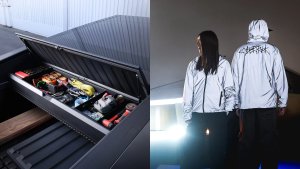
Tesla intends to eventually transition the Cybertruck production line to a fully autonomous variant with no controls, but little other changes
This will be focused on cargo delivery and logistics, rather than an adventurous do-everything pickup truck
Tesla is now producing dry-electrode 4680 cells with both anode and cathode made in Austin
Tesla is beginning to roll out a new iteration of the 4680 Model Y using the new cells
Tesla Energy
Tesla Energy continues to be one of the fastest-growing business segments
Tesla deployed a record 14.2 GWh in Q4 alone (up 29% YoY)
More manufacturing capacity is being built out
Tesla is still looking to add solar and batteries on Earth and solar in space for AI datacenters
This means vertically integrating a solar supply chain from raw materials to the end product
Tesla is aiming for 100GW/year of solar cells manufactured in the United States
Tesla confirmed that Megafactory Houston’s construction is going well
Mega Houston will produce Megapack 3 and Megablock starting in 2026
Tesla’s Lithium Refinery in Texas has commenced pilot production
The Tesla Powerwall Network supported over 89,000 Virtual Powerplant Events in 2025
This saved homeowners over $1 billion in electricity bills
Financials
Tesla reported $24.9 billion in total revenue for Q4 2025 (a 3% YoY decrease)
GAAP Net Income was $0.8 billion, while Non-GAAP Net Income was $1.8 billion for Q4
Operating cash flow was $3.8B, with Free Cash Flow at $1.4B for Q4
Automotive Revenue was $69.5B, down 10% YoY
Tesla saw increased demand in smaller markets, while there was a demand pull-back in the United States due to the end of the Federal EV Tax Credit
Energy Revenue was $12.8B, up 27% YoY
Tesla ended the year with a record $44.1 billion in cash and investments
This pile increased by $7.5 billion throughout 2025
Tesla’s bitcoin holdings were marked down 23% in Q4
Tesla’s CFO, Vaibhav Taneja, warned that 2026 will be a CapEx-heavy year
$20 billion in capital expenditures are planned
Funding six concurrent factory ramps
Lithium Refining
LFP Batteries
Cybercab
Semi
Megafactory Houston
Optimus
Tesla is sunsetting FSD’s one-time purchase and moving to a subscription model
Forward-Looking Outlook
Tesla’s CFO called this upcoming year “a new book” for the company as it pivots to AI and robotics
Tesla has entered an agreement to invest approximately $2 billion in xAI to acquire Series E Preferred Stock
This partnership aims to closely integrate Grok into Tesla’s products
Grok will be the “orchestra conductor” that manages fleets of autonomous cars and robots
Tesla continues to be constrained with battery pack production
Investor Q&A
Today there are ~90M cars sold globally each year, does Tesla have a view based on its robotaxi ambition what this number will be in 5 or 10 years and how does this impact Tesla's EV strategy to have more models?
The future is autonomous
General transportation will be better served by autonomy
90% of vehicle miles are done with 1-2 people in the vehicle, making it an excellent target for Cybercab
Cybercab will not ship with steering wheels or pedals; it will either drive itself or not drive
Tesla intends to produce more Cybercabs than all of the rest of their vehicles combined
Are there still plans to launch new models to address different price segments and vehicle types which could materially expand the TAM for Tesla?
Tesla has launched their least expensive models recently
Tesla will continue to bring down the cost of vehicles without sacrificing range or premium feel
Tesla is not looking to develop further models, based on their focus on the Cybercab
Historically Tesla has spoken about Gross margin per model, are there standalone Gross Margin targets for the current models excluding the benefits of FSD sales?
Can’t apply the cars sales model to software
Autonomy software will continue to grow and be the driver of Tesla’s growth
Cybercab is designed around a 50-60-hour per week duty cycle compared to the 10-hour per week duty cycle of the average car
Only vehicles Tesla intends to design going forward will be autonomous vehicles, with the exception of the Roadster
Roadster's debut in April is mentioned again
You once said: Loyalty deserves loyalty. Will long term Tesla shareholders still be prioritized if SpaceX does an IPO?
Skipped. Tesla does not answer non-Tesla-related questions at a Tesla Earnings Call
What is the current bottleneck to increased Robotaxi deployment & personal use unsupervised FSD? The safety/performance of the most recent models or people to monitor robots, robotaxis, in-car, or remotely? Or something else?
Tesla is working on learning scaling problems
That means learning from safety monitors on the ground
Long tail of the edge-case issues to solve
Tesla has been churning through them recently with minor FSD updates and builds
Unsupervised is now on the ground and deployed in Austin
Fleet size in Austin will scale just like the fleet in Bay Area
One noted item is charging constraints and service constraints
V14 is a variant of the Robotaxi software
Updates and upgrades from the Robotaxi build will filter down to FSD for consumers
After the unveiling of the Cybertruck, Musk stated that if it didn’t sell well, Tesla would build a more conventional-looking pickup. How practical would it be to create this new design on the Cybertruck architecture and could it be conveniently built on the existing production lines?
Cybertruck continues to be a leader in the electric pickup segment
Cybertruck line will transition to fully autonomous
Focus will be on deliveries and logistics
Regarding Optimus, could you share the current number of units deployed in Tesla factories and actively performing production tasks? What specific roles or operations are they handling, and how has their integration impacted factory efficiency or output?
Still in R&D phases for Optimus
Some basic tasks being performed in the factory
Old versions are being depreciated
Factory usage is for learning, not for actual production
Optimus Gen 3 will be a big jump for capabilities, especially in the factory
Tesla expects to increase its headcount at Fremont even with the closure of the Model S/X line
When is FSD going to be 100% unsupervised?
There are fully unsupervised vehicles in Austin now
Tesla is being cautious with the rollout, still, for safety
Edge cases and challenging intersections are something they’re watching for
Humans are having lots of accidents in these places, so FSD must be able to handle them safely
Tesla will reduce the amount of driver monitoring with each successive release as safety increases
What has surprised you about the robotaxi rollout so far, and what factors have constrained fleet expansion to date, which appears to be ~200 vehicles based on public tracking?
Not many surprises, Tesla has all the metrics
Approximately 500 vehicles between Austin and Bay Area at this point
Varying amount based on peak and off-peak times
Tesla is deliberately slow with this
All the supporting infrastructure is already in place, just have to take it slow
Are chase cars part of the initial driverless rollout? If yes, what milestones are required to remove them, and what additional value do they provide beyond a safety monitor?
Skip
Elon has been spending significant personal time on Tesla’s chip design. What was the forcing function behind this increased involvement, and do you think external chip sales will represent a significant portion of Tesla's valuation by the end of the decade?
Elon spends time on the most significant issues facing his companies
Every Tuesday and Saturday, focused on AI5
AI5 will be a big leap, and AI6 will be even better
No plans to sell outside of Tesla until they have enough chips for vehicles, Optimus, and their own data centers
Elon confirms the intent to build a Terafab in the US to consolidate and vertically integrate chip production
Call-in Questions
$20 Billion CapEx Increase, where is this going? Is this one-off or should we expect more?
Six new factories, a new data center, scaling Optimus and Robotaxi fleets, increasing training and compute speeds
Doesn’t factor in solar fab or chip fab
We should expect more large CapEx expenditures like this
xAI Investment Leverage
Furtherance of Master Plan IV, deploying AI to physical bodies
Tesla could do it themselves, but there are lots of things xAI can do to help
Memory Constraints
Tesla AI is very compute-efficient and very memory-efficient
Tesla’s focus is on increasing intelligence per gigabyte, intelligence density
Order of magnitude better in density than Grok
Terafab will help remove supply constraints on memory as well
China Optimus Competition?
Yes, China’s AI and humanoid robots are competitive
No significant competitors outside of China
Listen to Replay
If you’d like to listen to the entire earnings call, you can do so below.