After the bombshell report last year that Tesla was finally caving to consumer demand and bringing Apple CarPlay to its vehicles, the trail went surprisingly cold.
Now, thanks to new details from Bloomberg’s Mark Gurman, we know exactly why this feature has been delayed - technical challenges between Apple Maps, FSD, and sluggish adoption of the latest iOS update.
Integration with Tesla’s Map
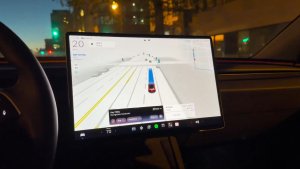
The core issue stems from how FSD and Tesla’s built-in nav currently interact. FSD relies on the car’s native navigation system for route planning, though it may sometimes deviate from the planned route on its own. However, the vast majority of driving decisions are made based on the planned route.
During internal testing, Tesla’s engineers discovered a major conflict. If a driver has CarPlay active, Apple Maps will run simultaneously and often provide conflicting turn-by-turn guidance. Imagine the car autonomously preparing for a right turn while Apple Maps tells you to go straight.
To prevent this confusing and potentially dangerous dual-navigation scenario, Tesla requested that Apple engineer a custom fix to keep the two mapping systems in sync. Surprisingly, Apple obliged and implemented the necessary adjustments to allow the vehicle and CarPlay to communicate and keep the routes in sync.
This news makes it sound like Tesla is planning to support FSD, even if you’re using CarPlay. The user would be able to add their destination in CarPlay and activate FSD to start driving toward their destination. Behind the scenes, CarPlay would send the destination to the Tesla OS, which would then communicate back the exact route to take.
iOS 26 Bottleneck
If Apple fixed the bug, why are we still waiting? According to the report, the answer lies in the iPhone update cycle.
Apple bundled this specific Tesla compatibility fix into an incremental update for iOS 26 (specifically, a patch following the initial 26.0 release). Apple released iOS 26 in September 2025, followed by iOS 26.0.1 and 26.1, which were both released before Tesla’s holiday update. However, iOS 26.2 wasn’t released until December 12th, and more recently, iOS 26.3 was released on February 11th. While it’s not clear which version includes the fix Tesla needed, it likely came in iOS 26.2 or later.
Another point of contention is that iOS 26 adoption has been notably slower than in previous generations.
According to Apple’s own recent App Store data, only about 74% of iPhones released in the last four years are currently running iOS 26 - and an even smaller fraction are running the specific incremental patch required for the Tesla fix. The total adoption rate across all active iPhones is even lower at just 66%.
Rather than releasing a highly anticipated feature that would immediately break or be buggy for a large share of owners due to the fix not being available in their iOS version, Tesla is holding this feature back until iOS 26 adoption is higher.
More Than a Windowed Mode?
When the update does finally roll out - potentially in the upcoming Spring Update - drivers should set their expectations regarding what CarPlay will bring.
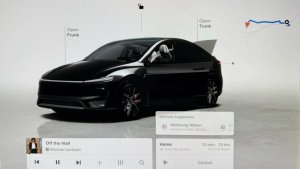
Tesla isn’t handing over the keys to the kingdom to Apple like other vendors do with CarPlay Ultra. Instead, CarPlay would run in its own app, meaning users would first need to open the CarPlay app, then select the CarPlay app they want to access. This would potentially add two docks to the Tesla infotainment while CarPlay is open, but Tesla does seem to be addressing some of these issues.
For example, if they’re making sure the route is consistent between Tesla Maps and Apple Maps in CarPlay, they may also be carrying over other details, like the song currently being played. So if users opened up Spotify on CarPlay, they’d be greeted by the current song instead of an interface that doesn’t match what they’re listening to. These features would certainly help avoid confusion caused by having multiple apps like maps, Spotify, Apple Music, etc.
One option Tesla could consider is showing only one dock at a time. If CarPlay isn’t open, you see the traditional Tesla dock with its list of apps. However, if you open CarPlay, then CarPlay hides Tesla’s dock, or potentially hides some Tesla apps that would be redundant, like Spotify.
Either way, expect CarPlay to largely run inside its own dedicated window. This compromise allows the driver to access CarPlay features and apps, while Tesla maintains control over vehicle controls, FSD visualizations, and the important information it must display on the UI.
Ultimately, Tesla's CarPlay integration is still very much alive - you just might need to remind your friends to update their iPhones before it arrives.