Tesla is one step closer to making its futuristic vision of the Cybercab a reality. The Federal Communications Commission (FCC) has officially granted Tesla a waiver to use Ultra-Wideband (UWB) radio technology for the Cybercab’s planned wireless charging system.
This is a big deal because, under normal rules, this specific type of radio technology is supposed to be handheld and can’t be permanently installed on outdoor equipment. Since Tesla’s wireless charging pads will be fixed to the ground and will likely sit outside in driveways or charging hubs, they needed a special "yes" from the government to move forward.
How Wireless Charging Actually Works
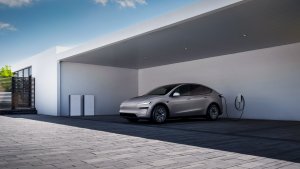
Tesla’s ultimate goal with the Cybercab is a fully hands-off, wireless fleet, which would involve eliminating the NACS charging port and relying entirely on inductive charging — much like how you might charge your smartphone on a wireless charger. However, for wireless charging to be efficient, the car has to be perfectly aligned over the ground pad.

That’s where the UWB tech comes in. According to the FCC filing, the vehicle first uses Bluetooth to "find" the charging pad. As the Cybercab gets closer, the UWB transceivers kick in to track the vehicle’s position with extreme precision. Once the car is perfectly centered, the wireless power transfer begins. Tesla has filed numerous patents for beam-steering technology to focus power on the vehicle’s receiver.
Tesla was able to convince the FCC to allow this because the signal is very low power and only turns on briefly while the car is parking. Once the car is sitting on the pad, the metal body of the vehicle actually blocks the signal, so it won’t interfere with other devices nearby.
Tesla’s First True Robotaxi
The timing of this approval couldn't be better. It comes just days after Tesla celebrated rolling the very first production Cybercab off the line at Gigafactory Texas. This two-seat, all-electric autonomous vehicle has been positioned as the centerpiece of Tesla’s Robotaxi network.

The idea is simple: a fleet of cars that can drive, clean, and now charge themselves without a single human hand involved. To make that happen, Tesla has also confirmed that the Cybercab will ship without a steering wheel, pedals, or even side mirrors. It’s a "vision-only" machine that will rely on the Full Self-Driving system to handle everything.
What’s Next for the Cybercab?
Now that the first unit has hit the floor at Giga Texas, Tesla is expected to start a slow manufacturing ramp-up. While the company has been testing prototypes in cities like Austin and even in harsh winter conditions in Buffalo, volume production isn’t slated to truly kick off until April.
Tesla maintains that the Cybercab will ultimately feature inductive wireless charging. However, recent sightings of validation units have revealed the presence of a traditional charge port. Located behind a small, manual drop-down door in the corner of the rear bumper, there’s a NACS port that test Cybercab builds currently use to top up.
If Tesla can stay on schedule, we’re only about two months away from seeing these steering-wheel-less taxis start to populate the Tesla Robotaxi fleet. It’s an ambitious leap, but clearing this regulatory hurdle with the FCC shows that Tesla is working on both the hardware and the infrastructure in parallel.