Tesla is preparing to take its most advanced software to one of the most complex driving environments in the world. The automaker officially announced this week that it aims to launch its Full Self-Driving (Supervised) system in Japan by the end of 2026.
This move is a massive step for the company’s expansion into the Asian market, where unique road layouts and strict traffic laws have previously kept the software at bay. According to a report from Nikkei, Tesla unveiled a new FSD-driven Model Y for testing on Japanese public roads on Thursday, signaling that the company is ready to move past private trials and toward a full consumer release.
FSD Testing on Japanese Roads
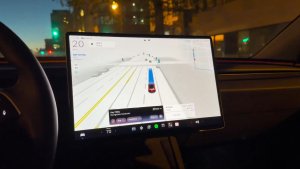
While Tesla has been privately testing FSD in Japan since August 2025, those tests were previously limited to a single Model 3 sedan. The company has now added its flagship Model Y SUV to the testing fleet, which will help gather more data across different vehicle heights and sensor positions.
The President of Tesla’s Japanese subsidiary, Riichi Hashimoto, stated, "We are trying everything we can to implement this system by 2026.” One of the biggest challenges is ensuring the AI complies with Japan's specific traffic regulations, such as the strict requirement to stop before crosswalks. Early feedback from testers has been positive, with users on X noting that the end-to-end system is "handling Japan's unique road environment smoothly.”
BREAKING🇯🇵 : First Tesla FSD experience on Japanese public roads in Tokyo.
— 前田謙一郎 Ken Maeda (@Kenmaeda77) March 5, 2026
It's handling Japan's unique road environment smoothly. Now, we're just waiting for official approval from the authorities.
Big step for Japan's mobility future! Here are some clips from my camera. pic.twitter.com/LRDnR4v2I7
Tesla's Global FSD Roadmap
The push into Japan is part of a much larger global rollout for the software. Currently, Full Self-Driving (Supervised) is available in seven countries: the U.S., Canada, Mexico, China (where it is awaiting full regulatory approval), Australia, New Zealand, and South Korea.
Tesla has several other major markets in its sights:
The United Arab Emirates: Originally slated for a January 2026 launch, the UAE remains a high priority for the next expansion phase. The automaker officially began FSD road tests in the UAE late last month.
Israel: Tesla has frequently teased plans to bring the software to Israel in the near future.
The European Union: This has been Tesla’s most anticipated market for years. While Elon Musk previously hinted at the first EU approval coming through in February, we are now well past, with no official word yet. However, recent code discoveries on Tesla’s Dutch website suggest that monthly FSD subscriptions are being prepped for the region.
To build hype and educate regulators and consumers alike in Europe, Tesla even launched an FSD ride-along program last year, giving locals a firsthand look at how the AI handles European city streets.
The Path to Autonomy
Because Tesla’s system is based on artificial intelligence and cameras rather than pre-mapped routes, it can be implemented in existing vehicles via simple over-the-air software updates. If approved, the feature could potentially be added to the roughly 40,000 Teslas already on the road in Japan.
As the software continues to evolve, Tesla is moving closer to its ultimate goal: an “unsupervised” version of FSD that no longer requires a human to keep their hands on the wheel or eyes on the road. For now, the 2026 Japan target represents another major hurdle to be cleared on the road to global autonomy.