The regulatory ice surrounding fully autonomous vehicles is officially beginning to thaw.
Today, the National Highway Traffic Safety Administration (NHTSA) hosted its inaugural National AV Safety Forum in Washington, D.C., bringing together federal regulators and the top executives from Tesla, as well as other self-driving companies like Waymo, Zoox, and Aurora.
The tone of the summit was overwhelmingly pro-innovation. Rather than focusing on restrictive red tape, the discussions centered on how the federal government can actively modernize outdated automotive laws to pave the way for a new era of America-first transportation technology.
Rethinking FMVSS
The highlight of the event came from Transportation Secretary Sean Duffy, who directly addressed the need to overhaul the Federal Motor Vehicle Safety Standards (FMVSS). Currently, these legacy regulations mandate that all street-legal vehicles possess traditional human controls, like a steering wheel, mirrors, and pedals. This is a massive regulatory hurdle for purpose-built robotaxis, and an unnecessary expense.
“A lot of our top innovators from Waymo, Zoox, and Tesla are here, and we're going to have a day-long conversation," Secretary Duffy stated during the panel.
"If you have an autonomous vehicle, do you need a steering wheel? We have to rethink some of our requirements, especially for autonomous vehicles, which will allow them to bring down the price, maintain the safety structure, but move forward and be competitive with the rest of the world."
Updating the FMVSS rulebook to exempt autonomous networks from these hardware requirements is the critical missing link for the industry. Removing redundant steering columns and pedal boxes will drastically reduce manufacturing complexity and lower the overall cost of the vehicles.
U.S. Transportation Secretary Sean Duffy at the first autonomous vehicle safety forum today:
— Sawyer Merritt (@SawyerMerritt) March 10, 2026
“A lot of our top innovators from Waymo, Zoox and Tesla are here, and we're going to have a day long conversation; If you have an autonomous vehicle, do you need a steering wheel? We… pic.twitter.com/24RkCv9Sur
Safety First, But America First
While the federal government is eager to foster domestic tech dominance, Secretary Duffy made it clear that the deregulation push will not come at the expense of passenger well-being.
"If it wasn't safe, we would shut it all down," Duffy firmly noted, reinforcing that the NHTSA will still demand rigorous safety validation from these companies before granting widespread deployment approvals.
However, the overarching message from the Department of Transportation is clear: the U.S. intends to aggressively lead the global autonomous race, heavily prioritizing an America-first approach to AI and automotive innovation.
Cutting Local Red Tape
Beyond modernizing vehicle design requirements, establishing a unified federal framework for autonomous vehicles would solve one of the biggest headaches for companies like Tesla: state-by-state regulatory fragmentation.
Currently, automakers are forced to navigate a complex and often contradictory patchwork of municipal and state-level red tape. States like California and New York have actively implemented their own strict, localized hurdles for self-driving deployment, bogging down rollout timelines.
"We don't want 50 states with 50 standards; we want one national standard".
Sweeping federal AV legislation would effectively override these localized bottlenecks by establishing a single, nationwide standard. For Tesla, this level of federal standardization is the ultimate catalyst. It would allow Tesla to lean forward and rapidly scale its Robotaxi fleet across the country without having to fight expensive, time-consuming regulatory battles city by city and state by state.
Cybercab Arrives in D.C.
Tesla Cybercab on display at the USDOT in Washington, DC pic.twitter.com/BceYXr5P3b
— Moe (@moemoe889) March 10, 2026
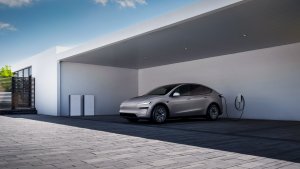
Tesla didn't just show up at the forum to talk and lobby for innovation. Instead, it brought the hardware to back up its words. Tesla brought a production iteration of its upcoming Cybercab, complete with all the additional new hardware we’ve seen to date, as well as a bevy of new changes, such as a bigger cabin camera, a camera in the trunk and more.
Showcasing the pedal-less, wheel-less Cybercab directly to the lawmakers and regulators responsible for its legal future is a strategic move by Tesla. By allowing regulators to physically interact with the minimalist interior and the advanced autonomous sensor suite, Tesla is actively demonstrating why legacy FMVSS requirements are obsolete for the next generation of transportation.