Just 24 hours after Tesla and xAI/SpaceX officially announced their joint Digital Optimus project, Elon Musk dropped another massive bombshell detailing how the new system will work.
It turns out, Digital Optimus isn’t just a software platform or a centralized supercomputer. Instead, it’s a massive, distributed compute network powered by your vehicle and your local Supercharger.
Taking to X, Elon expanded on his announcement, revealing that Tesla intends to utilize the idle compute power of its AI4-equipped vehicle fleet alongside millions of new, dedicated server units at Supercharger stations to process AI workloads.
Elon has previously spoken on distributed computing that would enable consumers to tap into their vehicles for either a computing profit while parked, or for their own use. It seems that Digital Optimus will be the first step towards reaching that goal.
Oh and it works in all AI4-equipped cars, so your car can do office work for you when not driving.
— Elon Musk (@elonmusk) March 12, 2026
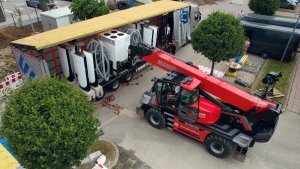
We’re also deploying millions of dedicated Digital Optimus units in the field at Superchargers where we have ~7 gigawatts of available power.
Your Car Does Office Work
The most immediate impact for consumers is the revelation that the computers in their cars could be put to work while the vehicle is parked, thanks to their massive computing power.
For years, there has been speculation that Tesla could eventually utilize its fleet as a massive, distributed supercomputer. At nearly every single earnings call from 2022 to today, Tesla’s executives have mentioned the fleet acting like an on-tap data center.
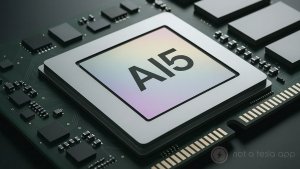
Because Tesla's AI4 (Hardware 4) computers are incredibly powerful but sit entirely dormant while a vehicle is parked at home or work, that untapped compute can now be leased out to xAI and the Digital Optimus network to process complex AI inference tasks.
While Elon didn't explicitly detail the financial structure yet, doing office work for you implies that owners could potentially earn passive income or free Supercharging credits in exchange for letting xAI utilize their car's compute hardware while it sits idle.
Digital Optimus vs OpenClaw
If you’ve been following the great AI race, you’ll likely have heard of OpenClaw. Originally launched late last year as a grassroots open-source project, OpenClaw has become a massive viral sensation in early 2026. It is an autonomous personal AI agent that runs locally on a user's computer, plugging into apps like WhatsApp or Telegram to independently read emails, book flights, and execute tasks directly on your machine.
However, OpenClaw is the ultimate wild west of AI. Because it requires deep, unrestricted access to a user's local files and applications to function, it has recently sparked a massive cybersecurity panic.
Security firms like Cisco have labeled OpenClaw a security nightmare due to severe vulnerabilities like silent data exfiltration and prompt injection, leading governments, including China, the US, UK, and Canada, to actively ban the software from federal enterprise devices.
This is exactly where Digital Optimus stands in contrast. While OpenClaw relies on users handing over the keys to their personal hard drives to an experimental LLM, Digital Optimus is a secure, vertically integrated, enterprise-grade network.
Instead of a chaotic, consumer-level desktop tool, Tesla and xAI are building a controlled walled garden AI. By running workloads entirely within Tesla's proprietary hardware ecosystem, Digital Optimus can process massive AI tasks at scale without exposing the network to the catastrophic security flaws currently plaguing open-source agents.
This is all possible by utilizing secure AI4 computers and dedicated Supercharger nodes, which can process data either locally for users or over secure enterprise connections for Tesla and xAI.
Why Use Superchargers?
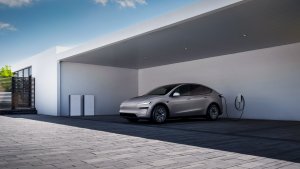
While the vehicle fleet provides a massive, distributed web of compute, the heavy lifting will be done at Tesla's Supercharger stations.
"We’re also deploying millions of dedicated Digital Optimus units in the field at Superchargers where we have ~7 gigawatts of available power.”
One of the biggest bottlenecks in the current AI arms race isn't just securing NVIDIA chips; it is finding the massive amounts of electricity required to run them. Building traditional gigawatt-scale data centers takes years of regulatory approvals and grid upgrades. Tesla, however, already has the ultimate cheat code: the global Supercharger network.
Because Tesla has already secured the grid connections and deployed stationary battery storage systems (like Megapack) at many of these charging sites, they have a staggering 7 gigawatts of available power ready to use.
By deploying millions of dedicated Digital Optimus server units directly in the field at these stations, Tesla can bypass the traditional data center bottleneck entirely.
Building Synergy
This announcement connects all of Elon’s major ventures. Tesla Energy provides the battery storage, the Supercharger network provides the grid infrastructure, the vehicle fleet provides the distributed edge-compute, and xAI/SpaceX provides the software to tie it all together.
As xAI races to build the world's most capable artificial general intelligence, tapping into Tesla's 7 gigawatts of distributed power proves exactly why the merger of SpaceX, xAI, and Tesla's broader ecosystem is an unstoppable force in the tech sector.