Elon Musk has just set a timer on what could be Tesla’s most ambitious infrastructure project to date. On Saturday, the billionaire CEO took to social media to announce that the company’s “Terafab Project launches in 7 days.” While the post was brief, it signals the start of Tesla’s move to solve its next great supply chain bottleneck: the manufacturing of artificial intelligence chips.
Why Tesla Needs a Terafab
For years, Tesla’s strategy has been to build the machine that builds the machine. We have seen this with battery production at Giga Nevada and lithium refining in Texas. Now, as Tesla pivots from being a simple carmaker to an AI and robotics powerhouse, it has identified silicon as its biggest hurdle.
During the company’s 2025 Shareholder Meeting last fall, Musk seriously floated the idea of a "Terafab" — a facility that is like a Gigafactory, but for AI chips. The goal is total vertical integration. Musk previously explained that “even when we extrapolate the best-case scenario for chip production from our suppliers, it's still not enough.” By building its own fab, Tesla can stop being beholden to the limited capacity of external foundries and secure the volume needed for its future.
The Computational Backbone: AI4 to AI8
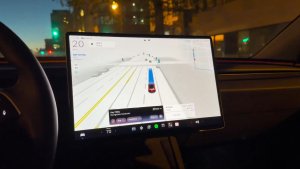
Tesla’s AI chips are meant to be the brains behind everything it builds. Currently, the AI4 chip powers the company’s mainstream vehicles and the Full Self-Driving (FSD) system. It will also be the core of the upcoming Cybercab robotaxis. However, Tesla is already looking much further ahead.
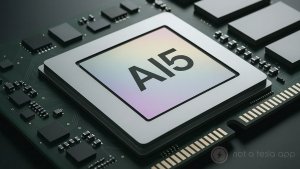
The company has finished designing its next-gen AI5 chip, which is expected to enter mass production in mid-2027. This chip is a generational leap, boasting 10x more raw compute and 9x more memory capacity than AI4. It isn’t just for cars; it is the unit required to power millions of Optimus humanoid robots.
Following that, the AI6 chip is already part of a $16.5 billion production agreement with Samsung. Musk has even theorized that AI7 and AI8 could eventually be destined for space, powering orbital data centers managed by xAI and SpaceX.
The Challenge of Building a Foundry
Building a chip factory from scratch is arguably the hardest technical challenge in the world. Currently, Tesla relies on a mix of partners: Samsung builds AI4, while the Taiwanese giant TSMC is slated to handle the first wave of AI5. Musk has even mentioned potentially working with Intel to bridge the gap until Tesla's own facility is ready.
The vision for the Terafab is staggering. It is expected to include 10 separate modules, each capable of producing 100,000 chips per month. If successful, this would be the most advanced AI chip factory on Earth. It would allow Tesla to treat its entire fleet of parked cars as a decentralized supercomputer, with every vehicle running the same high-end hardware.
With the project’s launch just a week away, we still don't know where Tesla plans to put this massive Terafab, or if Tesla will break ground on a brand-new site or expand an existing facility with a partner like Samsung or Intel. One thing is certain: Tesla is tired of waiting for the rest of the world to catch up to its compute needs.