Tesla and LG Energy Solution have officially finalized a massive partnership that will reshape the American energy landscape. The U.S. Government this week confirmed a $4.3 billion agreement between the two companies to build a Lithium Iron Phosphate (LFP) prismatic battery cell factory in Lansing, Michigan.
The announcement came during the Indo-Pacific Energy Security Summit, where the U.S. Department of the Interior noted that "American-made cells will power Tesla's Megapack 3 energy storage systems produced in Houston, creating a robust domestic battery supply chain." This confirms preliminary reports of a Tesla-LG battery factory deal from last month and sets a production start date for 2027.
Strengthening Tesla’s American Supply Chain
Tesla’s energy business is currently its fastest-growing vertical, frequently posting record-breaking deployment numbers for Megapacks and Powerwalls. To maintain this momentum, Tesla is leaning heavily into vertical integration. By sourcing LFP cells from Michigan, Tesla can avoid the geopolitical risks and tariffs associated with importing cells from Chinese giants like CATL or BYD.
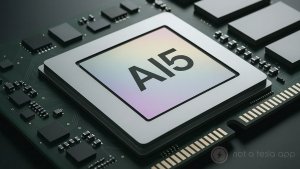
The Lansing facility will boast an annual capacity of 50 GWh, which is a massive addition to Tesla’s existing LFP cell plant in Sparks, Nevada. When combined with Tesla’s lithium refinery in Corpus Christi, Texas, the company is building a nearly bulletproof domestic supply chain. This push for self-reliance even extends to silicon, with Elon Musk recently announcing the launch of the "Terafab" AI chip factory project later this week.
Powering the Next Generation: Megapack 3 and Megablock
The LFP cells produced in Michigan are destined for Tesla’s latest industrial storage products, which were unveiled last fall. The Megapack 3 is a complete redesign of the company's flagship storage unit. It features 5 MWh of usable energy and a simplified thermal bay that uses an enhanced Model Y heat pump, resulting in 78% fewer connections and fewer failure points.
Tesla is also introducing the Megablock, a plug-and-play platform that integrates these next-gen units. The Megablock is designed to be 23% faster to install with 40% lower construction costs. Tesla is targeting a commissioning speed of 1 GWh in just 20 business days — enough to power 400,000 homes in less than a month.
Why LFP is the "Undisputed King"
For stationary storage, LFP is the ideal chemistry. While it isn't as light as the nickel-based batteries found in high-performance cars, it is much more durable. LFP cells can handle over 10,000 charge cycles, carry practically zero risk of fire (thermal runaway), and eliminate the need for expensive minerals like cobalt.
Perhaps most importantly, building these cells in Michigan allows Tesla’s customers to take full advantage of the tax credits in the U.S. Inflation Reduction Act (IRA). This makes Tesla’s energy products even more financially attractive for large-scale utility projects compared to competitors who still rely on imported batteries.
As Tesla Energy continues to scale, this $4.3 billion deal ensures that the battery supply will be ready to meet the soaring demand for a cleaner, more reliable grid.