Tesla is entering the home stretch as it prepares to launch the Cybercab, and the latest production units are showing off some major refinements. New sightings of the autonomous two-seater have revealed a significantly updated charge port and a thoughtful focus on accessibility that could make it a game-changer for urban mobility.
As Tesla prepares for volume production at Gigafactory Texas next month, these tweaks suggest the vehicle is moving away from some of its more experimental concepts in favor of real-world reliability.
A New and Improved Charge Port
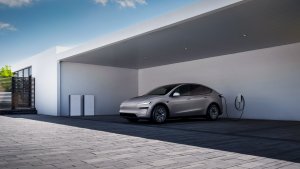
The biggest hardware surprise comes from the charging system. While Tesla has long teased that the Cybercab would rely entirely on wireless induction charging, recent production units have been spotted with a much more "finished" physical charge port.
According to JoshWest247 on X, the new port features several "huge changes" compared to earlier prototypes. The design is now fully integrated with a simpler door, a full surround gasket, and a flexible housing that eliminates the need for a weather plug. It’s significantly different and a lot more polished than the previous iteration, which we saw in action last month.

Importantly, the flap on the new charge port isn’t motorized, likely to optimize for low manufacturing and replacement costs. Seeing such a fleshed-out physical port this close to the April production start suggests that the Cybercab will launch with traditional plug-in charging first, using a native NACS port. While Tesla recently won FCC approval for the Ultra Wideband technology needed for wireless charging, that feature now looks like an "eventually" upgrade rather than a day-one necessity.
Built for Accessibility
Beyond charging, Tesla is also focusing on who will be using these vehicles. Eric E., Tesla’s Cybercab Engineering Lead, recently confirmed that the vehicle was designed with accessibility at its core.
"We built the seat height to be inline with standard wheel chair seat height. Accessibility is very important in autonomous vehicles, freedom of transportation for everyone is critical," Eric said on X.

By matching the seat height to a standard wheelchair, Tesla is making it much easier for passengers with limited mobility to slide into the cabin, a crucial feature for a vehicle meant to provide "freedom of transportation for everyone." According to the Tesla engineer, the Cybercab’s seat height and unique butterfly doors allow for a wheelchair to be parked parallel to the seat with plenty of room to maneuver between the two.
Production Refinements and Final Specs
The first production Cybercab has already rolled off the line, and we are seeing a massive "sanity check" of the hardware. Recent sightings in Austin have revealed larger front-facing cameras, an interior trunk camera to ensure passengers don’t leave anything behind, and even ambient lighting all along the cabin.
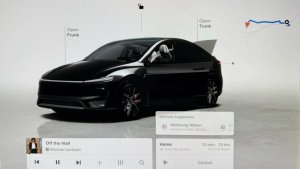
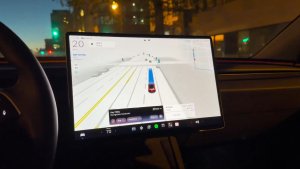
To ensure the Full Self-Driving system stays active in all conditions, the Cybercab is equipped with a high-pressure washer system for every external camera. This is a level of redundancy not seen on consumer Teslas, and it's necessary for a vehicle the company plans to eventually ship without a steering wheel or pedals. Inside, nearly every function is handled by a massive 21-inch touchscreen, with only physical buttons for the doors and windows, along with a hazards button that doubles as an emergency stop trigger.
As Tesla moves toward its April mass production target, the Cybercab is looking less like a science project and more like a rugged, accessible workhorse for the upcoming Robotaxi network. The transition to a driverless society is quickly becoming a reality, and it seems Tesla is making sure everyone — including those with mobility challenges — can come along for the ride.