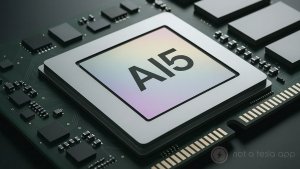
Tesla's next-generation silicon is officially heading to the Lone Star State. During a recent shareholders' meeting, Han Jin-man, President and Head of the Foundry Business at Samsung Electronics, confirmed that the tech giant will manufacture Tesla's highly anticipated AI5 chips at its new semiconductor facility in Texas.
According to Han, high-volume mass production of the chips at the Texas plant is slated to begin in the second half of 2027. This manufacturing partnership ensures Tesla will have a localized, high-volume supply chain for the hardware powering its next-generation vehicles and robots.
A Dual-Foundry Approach
This confirmation from Samsung perfectly aligns with the manufacturing roadmap laid out by Tesla CEO Elon Musk late last year. In November 2025, Elon took to X to explain that Tesla would utilize a dual-foundry strategy for its next-generation compute hardware, splitting the massive manufacturing load between industry heavyweights TSMC and Samsung.
Slightly different versions of the Tesla AI5 chip will be made at TSMC and Samsung simply because they translate designs to physical form differently, but the goal is that our AI software works identically.
— Elon Musk (@elonmusk) November 4, 2025
We will have samples and maybe a small number of units in 2026, but high…
By securing production lines at both TSMC and Samsung’s new Texas plant, Tesla is effectively bulletproofing its supply chain against geopolitical and logistical bottlenecks.
The Timeline: 2026 Samples vs 2027 High Volume
The late 2027 date from Samsung may seem surprising, as Samsung previously mentioned that production would begin in late 2026. The initial production runs of AI5 will be early prototype runs to finalize the chip design, work on manufacturing improvements, and provide samples for Tesla to begin training with.
"We will have samples and maybe a small number of units in 2026, but high volume production is only possible in 2027," Elon clarified in his November post.
Those initial 2026 batches, which will likely be small runs from TSMC, will allow Tesla to begin validating the hardware in early vehicle builds, Cybercab prototypes, and Optimus units. But as Han confirmed to shareholders this week, the massive, high-volume production required to supply millions of consumer vehicles will rely heavily on the Texas facility ramping up in the second half of 2027.
Rivaling Nvidia's Best
The stakes for the AI5 rollout could not be higher. As Tesla continues to push toward generalized autonomy and its new Digital Optimus infrastructure, the computational demands placed on its hardware are skyrocketing.
Tesla designed the AI5 chip to directly rival the performance of Nvidia's flagship $30,000 AI processors. Expected to be roughly ten times more capable than the current Hardware 4 (AI4) computer, AI5 will consume slightly more power but deliver a monumental leap in localized processing capabilities.
This is due to the extreme specialization that Tesla has focused on with its chips. AI5 is specifically designed to perform extremely fast for FSD’s particular computational tasks, which makes it that much more capable than Nvidia’s general-purpose AI hardware. However, Nvidia has now confirmed that they’re now also entering the robotaxi arena with a software/hardware solution.
AI5 will punch far above its weight, because the entire Tesla AI software stack is designed to make maximally effective use of every circuit. We co-signed our AI software and hardware.
— Elon Musk (@elonmusk) March 19, 2026
Bear in mind that AI5, while it can be used for training in data centers, is primarily…
With Samsung's Texas facility officially on the hook for mass production, Tesla is successfully laying the physical groundwork to bring server-level supercomputer capabilities directly into its vehicles.
Cybercab First
Expect the Cybercab to be the first vehicle to take advantage of AI5, allowing Tesla to closely monitor the new hardware and leverage it for the Robotaxi network expansion in Las Vegas, Dallas, and other cities across the U.S.