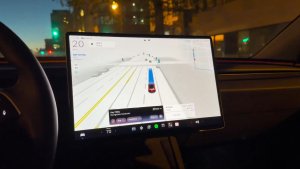
Tesla is finally on the verge of cracking the code for autonomous driving in Europe. After well over a year of regulatory deadlock and a massive campaign to prove the safety of its technology, the automaker has announced that a formal approval for Full Self-Driving (Supervised) is scheduled for next month in the Netherlands.
According to an update from Tesla Europe, the company has officially completed the final vehicle testing phase with the RDW (Rijksdienst voor het Wegverkeer), the Dutch vehicle authority. The RDW has communicated an expected approval date of April 10, 2026. This marks a slight shift from the previously anticipated March 20 deadline (and Tesla was originally hoping for FSD to receive its first EU approval back in February), but it represents the most solid timeline European owners have ever had.
The Long Road Through European Red Tape
For European Tesla owners, watching the rapid evolution of FSD in North America has been a bittersweet experience. While drivers in the U.S. and Canada have enjoyed neural-network-based autonomy for years, the European rollout has moved like molasses. The primary hurdle has always been the gap between Tesla’s innovative AI approach and the European Union’s rigid, rules-based automotive governance.
Specifically, Tesla has had to navigate the UN R-171 Driver Control Assistance Systems regulation. These rules were written for basic lane-keep assist and cruise control, effectively making the most capable version of FSD illegal in its current form. European regulations are prescriptive; they define exactly how a system must act. Tesla’s FSD, on the other hand, is outcome-based, learning how to drive safely through massive amounts of real-world data.
Tesla has refused to compromise on the integrity of the software just to satisfy outdated rules. The company previously noted that making FSD compliant with today’s rigid regulations would actually deteriorate the experience and make the system less safe. Instead, Tesla chose the harder path: proving to regulators that the system works better than a human.
The Article 39 Strategy
To bypass the glacial pace of broad EU-wide regulatory changes, Tesla utilized a legal maneuver involving EU Article 39. This allows for national exemptions for yet-to-be-regulated behaviors. By focusing on a specific partnership with the RDW in the Netherlands, Tesla is seeking a national "green light" that can trigger a domino effect across the continent.
Once the Dutch authority grants the exemption on April 10, other EU member states can choose to recognize that approval nationally. This "mutual recognition" mechanism allows FSD to spread quickly through individual countries while waiting for the Technical Committee on Motor Vehicles (TCMV) to provide a final, official EU-wide vote. Tesla currently anticipates that EU-wide approval could arrive as early as this summer.
Proving Safety Through Staggering Data
The push for this April approval hasn't just been about paperwork; it has been a long marathon of testing and transparency spanning about 18 months. Tesla has been extremely busy generating the data required to satisfy 400-plus compliance requirements. The company’s recent update detailed the sheer scale of this effort:
Over 1,600,000 km of FSD (Supervised) testing specifically on EU roads.
More than 13,000 customer FSD ride-alongs to generate local hype and feedback.
At least 4,500 track test scenario executions to validate emergency maneuvers.
Dozens of research studies into safety performance and results.

Since last fall, Tesla has been offering public FSD ride-alongs in several European countries. These events were designed to give locals and regulators a taste of the system, helping to demystify how the AI handles the complex, narrow streets of European cities. Earlier this year, CEO Elon Musk doubled down on the promise that FSD would arrive in both Europe and China in 2026, and it looks like he is finally on the cusp of delivering.
What This Means for European Owners
The financial and developmental implications of this launch are massive. Europe represents an enormous market for Tesla, and unlocking FSD revenue there will be a significant boost to the company’s bottom line. More importantly, the data generated from millions of European kilometers will help the FSD "flywheel" learn the specific nuances of European traffic signs, roundabouts, and cyclist behavior even faster.
Signs of the impending launch are already appearing on the consumer side. References to monthly FSD subscriptions were recently discovered on Tesla’s Dutch website, which now makes sense given that the Netherlands is shaping up to be the first country to get the feature. This mirrors the subscription model used in North America, making the high-end software more accessible to owners who don't want to pay the full upfront cost.
Following the Netherlands' approval, we expect a rapid cascade of similar announcements from neighboring countries. While the bureaucracy has been frustratingly slow, the result will be a system that hasn't been "watered down" for compliance but has instead forced the regulations to catch up to the technology.
Tesla Europe stated that they are "extremely proud of the work conducted with the RDW team" and are looking forward to finally sharing the software with "patient EU customers.” If everything stays on track for April 10, the "molasses" era of European FSD is finally coming to an end.